

Bring active learning to your lab, classroom, or online course
with our easy-to-use software platforms, interactive content, and hardware
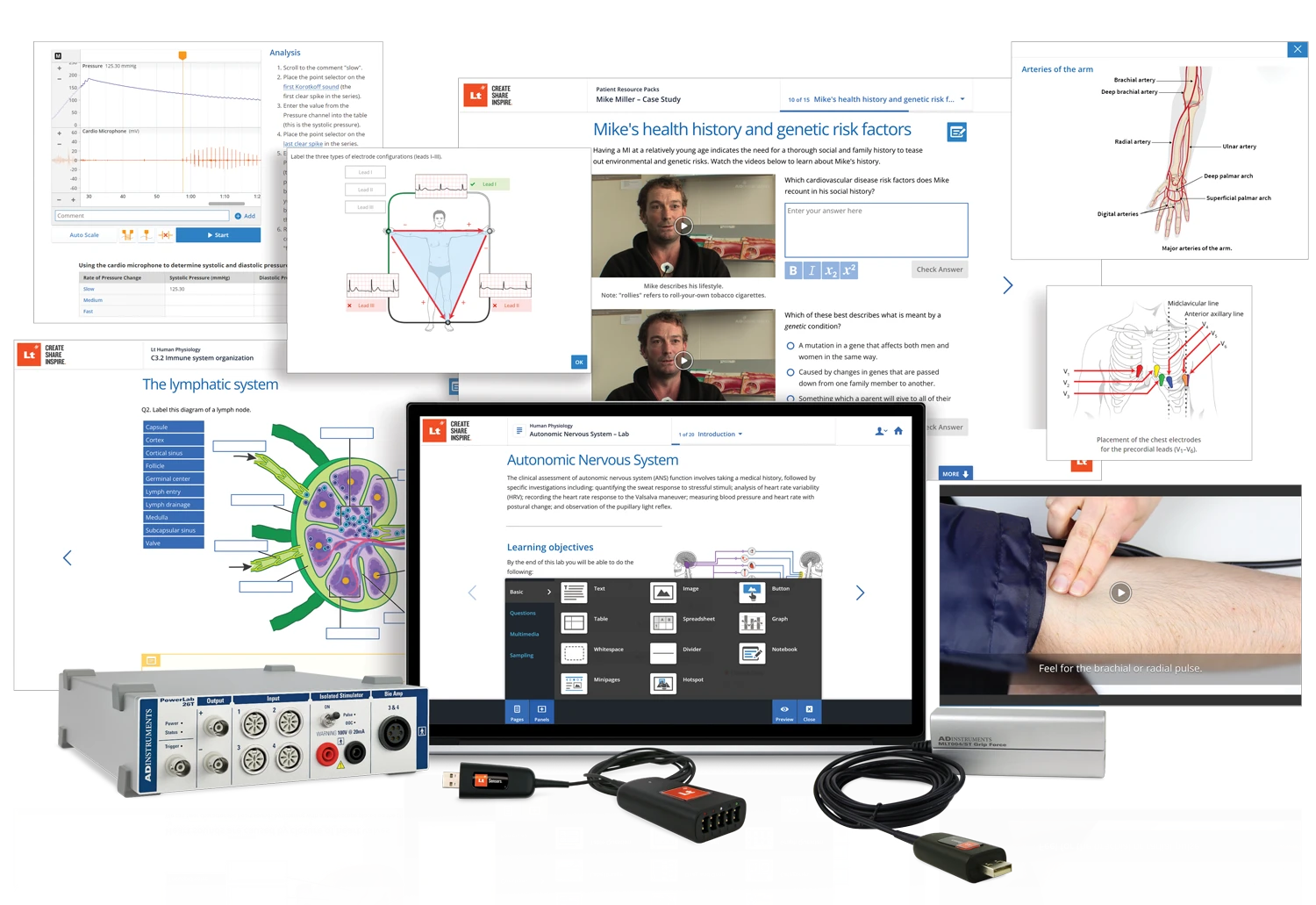
Our customizable education systems provide all the experiments, hardware, software, and lessons you need to teach and create a stimulating learning environment that guides your students to connect theory and practice.
Creating a custom education system is easy


Lt is an online learning platform with ready-to-use content for life sciences, nursing, and medicine.
Create engaging, interactive lessons with our physiology, anatomy, and biology education software.
Future-proof your course with our innovative and versatile teaching platform.


"We have seen high student engagement and satisfaction, and widespread adoption over many disciplines and courses."
- Sharon Herkes, Senior Lecturer, Physiology, University of Sydney
Meet our Content Team
Our Education Content Team is a highly skilled and experienced team who are passionate about science and learning! We design and create the lessons and labs within Lt and Lt LabStation, in a variety of subject areas including physiology, anatomy, nursing, medicine. and biology. Our team includes instructional designers, medical illustrators, and a localization expert.
An important aspect of our work is to keep up with the latest learning design strategies and evidence-based teaching practices so that we can apply these strategies and theories to create accessible, interactive lessons. We introduce students to metacognitive skills so that they can take control of their own learning, and further engage them through questions and interactive activities.
Our medical illustrators make sure our lessons are full of beautiful images with a clear and consistent style, while taking accessibility guidelines into account.
“I want to make high quality and engaging material that pushes the boundaries of science education.”
- Tim, Instructional Designer

While studying toward my degree at the University of Otago, I discovered a love of teaching when I began tutoring math, which eventually developed into a career as an instructional designer. I love to approach teaching from the perspective of the learner, and I want to give students the tools they need to understand the world around them.
Favorite Lt collection
Our Veterinary Physiology collection is such a comprehensive look at the subject; having case studies that can be followed throughout the lessons brings a wonderful element of storytelling to learning.
I’m passionate about fostering scientific curiosity and empowering students to take ownership of their learning. My background is in biology and marine ecology, but after a year researching assessment practices in higher education I gained an interest in the cognitive science behind how people learn and remember. I love staying up-to-date with the latest studies in that field, and implementing research-based learning strategies in our lesson design.
Favorite Lt collection
The Preclinical Medicine Collection is really special because it includes case studies that feature videos of real patients (not actors!), their families, and the entire medical team involved in their care. It’s really powerful to integrate medical science alongside candid videos of individuals sharing their personal experiences with a variety of medical conditions.
I have an interest in health science, particularly related to the brain. My Master’s research explored learning, anxiety, and brain inflammation after stroke, and I've enjoyed studying a wide range of life science subjects including physiology, anatomy, and psychology. Good science education is vital to keep advancing both healthcare and neuroscience and I want to make high-quality and engaging material that pushes the boundaries of science education.
Favorite Lt collection
The Neuroscience Collection - a large collection of fun labs with a wide range of topics - from reflexes and muscle twitch experiments to the Stroop effect and classical conditioning.
My love for animals carried me into my zoology degree and toward science, but while finishing my BSc I realized I missed the more creative side of things. I found science communication to be right up my street, explaining hard science in fun and approachable ways to people from all backgrounds. I enjoy coming up with ideas that are a bit out there and incorporate lots of different skills to make an engaging yet easy way of imparting scientific knowledge.
Favorite Lt collection
The Biology Collection, because it has a little bit of everything in it. I like being able to go from photosynthesis to cells to the atmosphere. It’s a great place to start to see what aspect interests you the most.
Ever since I was a child I’ve had a strong fascination with how the body works and was determined to find any “easter eggs” of the human body, and tell anyone I could about my new discoveries. By coaching and tutoring during high school and university, I found my love of processing and conveying information for others to understand easily. In this role I enjoy imagining myself as a student who doesn’t yet understand the concept, and thinking of ways which would help make the concept ‘click’.
Favorite Lt collection
The Exercise Physiology Collection, being able to understand how our bodies respond to exercise and why is both incredibly fascinating and applicable to everyday life.
As a medical illustrator I develop the artwork and multimedia that brings our digital content to life! My background in graphic design and education gives me a passion for creating fun and interactive learning experiences that engage the senses and improve learners' knowledge and understanding. My role includes illustration, photography, and video editing - and I put these all together in Lt, with its easy authoring system and sleek layout!
Favorite Lt collection
The Anatomy Collection stands out for me. It covers every system of the human body, while delving into histology, dissection, and model labs. It has a great array of visual elements and activities to help students understand the material.
Throughout my time studying biochemistry, I developed a passion for making graphical representations of complex datasets. This, combined with a love for the visual arts, led me to become a medical illustrator. I believe clear illustrations greatly enhance a student’s understanding of science. I embrace the challenge of creating images that assist with communicating complex scientific concepts to students.
Favorite Lt collection
The Understand Your Physiology resource - it has such a broad range of interactive questions which are great for student engagement, as well as sections designed to allow students to apply their knowledge.
Alternative software

If you need a lab-based solution, Lt LabStation has all of the benefits of Lt and is ideal for offline life science teaching.

If you want to use research-grade software and hardware in the teaching lab, we offer LabChart for Education.
Lt Sensors and PowerLab
90
of the top 100 Universities in the world use 
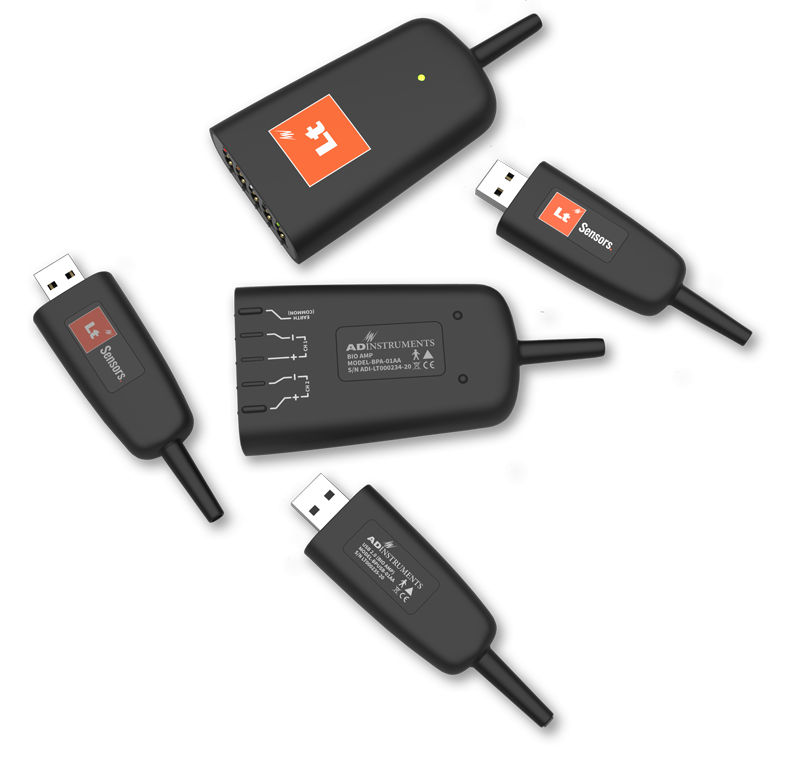
A cost-effective way for your students to quickly and easily record biosignals directly into Lt via USB.
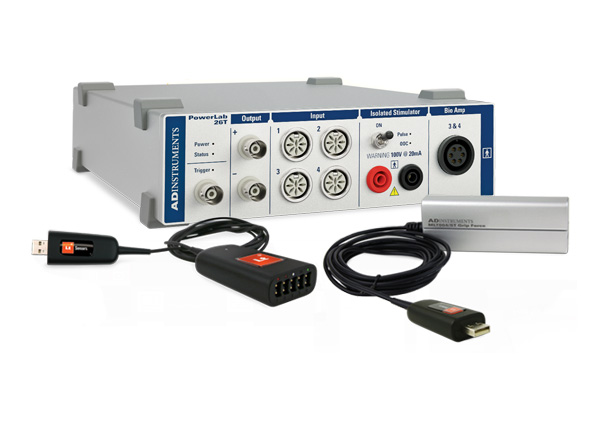
Lt Sensors connect directly to Lt through the USB connection on your Windows-based laptop or desktop computer. Students use the Lt Sensors to record and analyze their own physiological signals in real time – these products function as ECG/EKG, EEG, EMG, EOG, respiratory rate, and finger pulse sensors. This active engagement helps students to quickly grasp and understand core physiological concepts in Lt’s Human Physiology Labs.
Lt USB Sensors are perfect for educators that require new or additional hardware for human physiology courses. Together with Lt, these sensors are an affordable, easy to use data acquisition solution that give students an authentic lab experience, while also allowing flexibility between face-to-face and remote learning.
High performance data acquisition for your life science classroom experiments
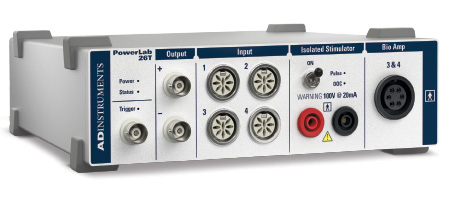
PowerLab is engineered for precise, consistent, reliable data acquisition, giving you the reproducible data you need while meeting the strictest international safety standards. Simple to set up, PowerLab connects directly to Windows and Apple computers via USB port.
The T Series PowerLab is an economically priced high quality DAQ unit with built-in, fully isolated, two-channel bio amplifier, isolated stimulator, separate non-isolated analog inputs and a differential-mode analog output.
"PowerLab simply WORKS. It never crashes or has to be rebooted, and is 100% reliable."
- Dr Geovanni Casotti, Professor of Biology, West Chester University, USA.
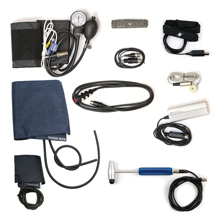
Choose from a range of education kits to suit your specific teaching requirements and budget. Created with focus and flexibility in mind, our education kits have been designed to align with the latest Lt and Lt LabStation lessons and content, ensuring that you have everything you need for your teaching labs, and nothing you don’t.
All education kits can be matched with your choice of software, lessons and PowerLab.