



Almost 40 years ago, Tony Macknight, Michael Macknight and Boris Schlensky founded ADInstruments. They were joined in the very early stages by Graham Milliken.
As we prepared to celebrate this incredible milestone, we wanted to look back at those early years. How did the founders find each other? And did they know what they had started?
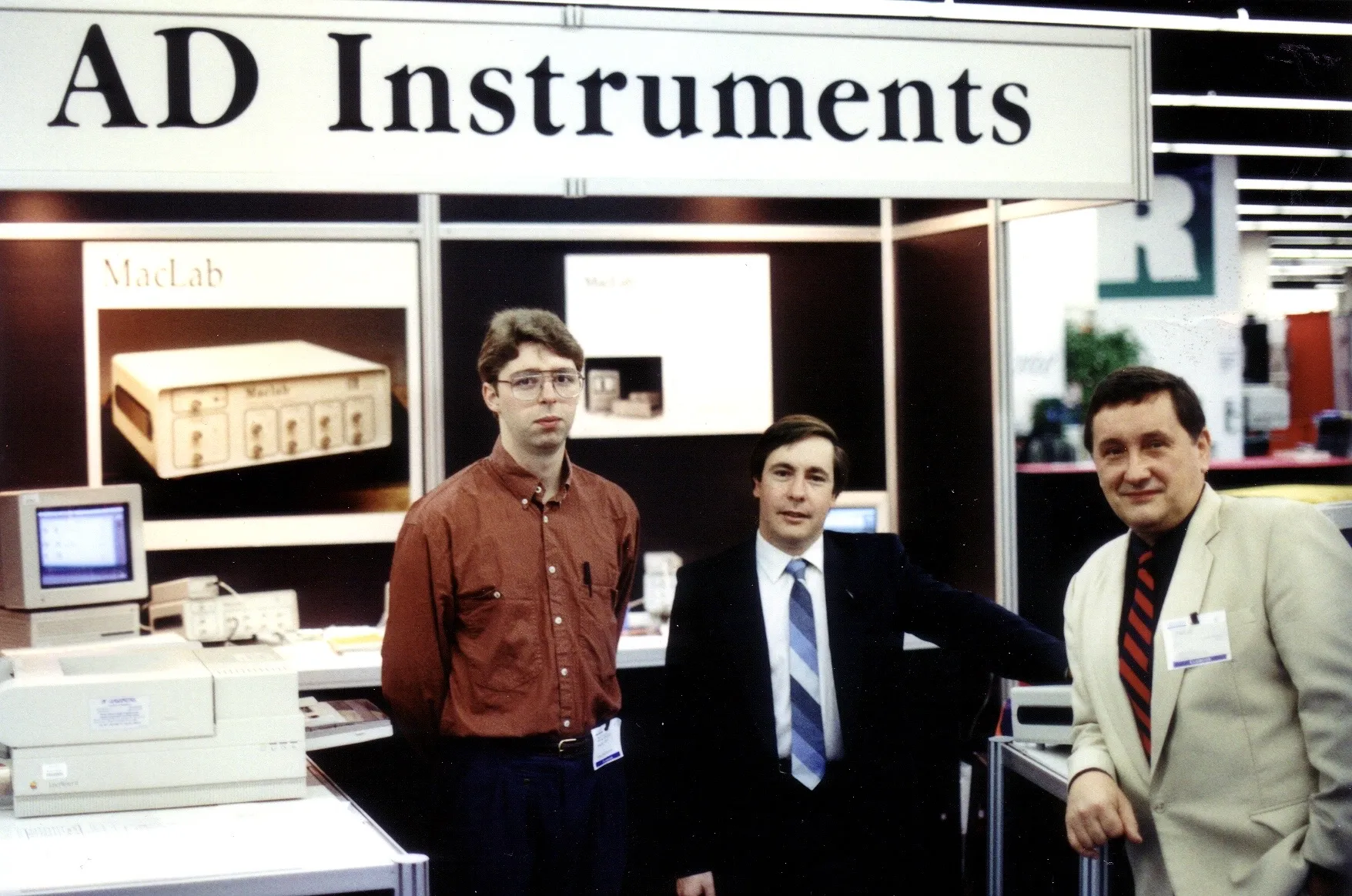
Michael Macknight (left), Tim Spencer (middle), and Boris Schlensky (right) in the 1980s
The idea for the MacLab came from a request. Tony Macknight, then head of the University of Otago Physiology Department, asked his son Michael if there was a way to digitize physiological signals.
At the time, the experiments in the physiology department relied on aging Grass Polygraphs and oscilloscopes that needed to be replaced. These analog recording devices were very expensive, bulky, difficult to maintain, frustrating to calibrate, and their ideal output was a huge pile of paper tens to hundreds of meters long. Interpreting signals was like navigating a map. Comparing multiple signals was equal parts mathematics and acrobatics. The research took up a lot of space, for the equipment, the interpretation, and the storage of this data; and with a digital revolution sitting on the horizon, Tony wondered if there was a better way.
Michael, then a computer science post-grad, was looking for a project for his master's thesis. There was no grand plan. Michael needed a project, Tony had a problem, and with the blind optimism of people focused on a solution, they developed the MacLab - the first system to digitize physiological signals.
Tony’s problem wasn’t unique. Around the world, his colleagues were dealing with the same issues and asking themselves the same question: Is there a better way to do this? Other companies had started trying to develop a solution, but they weren’t there yet.
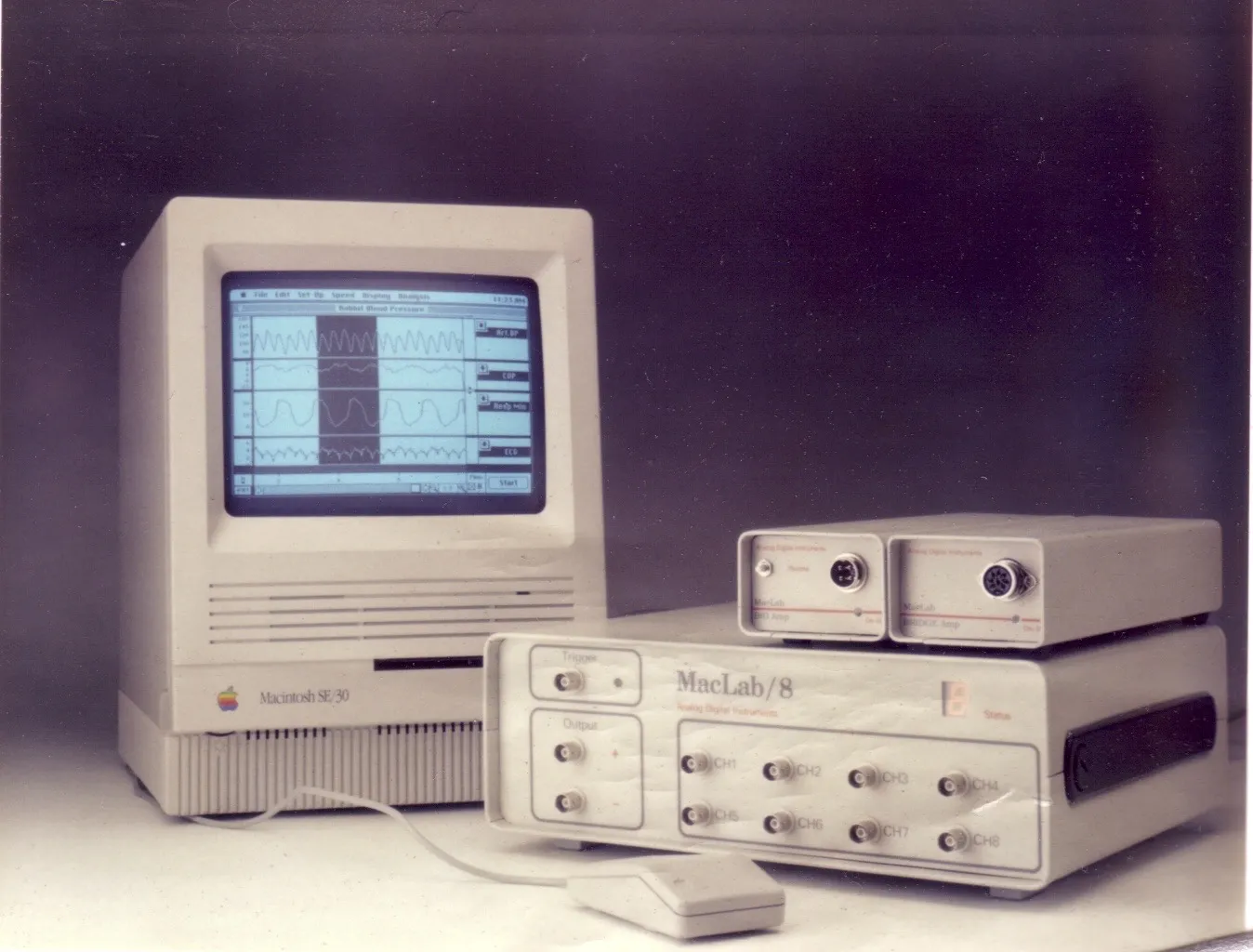
The first MacLab
“Tony was at an experimental biology conference in Washington DC.” Michael says, “There were 20,000 - 30,000 attendees from all over the world. There was an area at the conference where academics were encouraged to bring along what they were working on. Tony set up our equipment, and people gathered around and were instantly interested.”
One of those people was Boris Schlensky, an electronics engineer who had spent much of his career in data acquisition. Boris was developing documentation for an analog-to-digital data acquisition device for PC. So, when he walked into that conference room, he knew exactly what Tony was demonstrating.
“Boris knew instantly what Michael had created and the value of it,” says Graham. “When he first showed me a MacLab, he was so excited. He was like a kid in a candy store”.
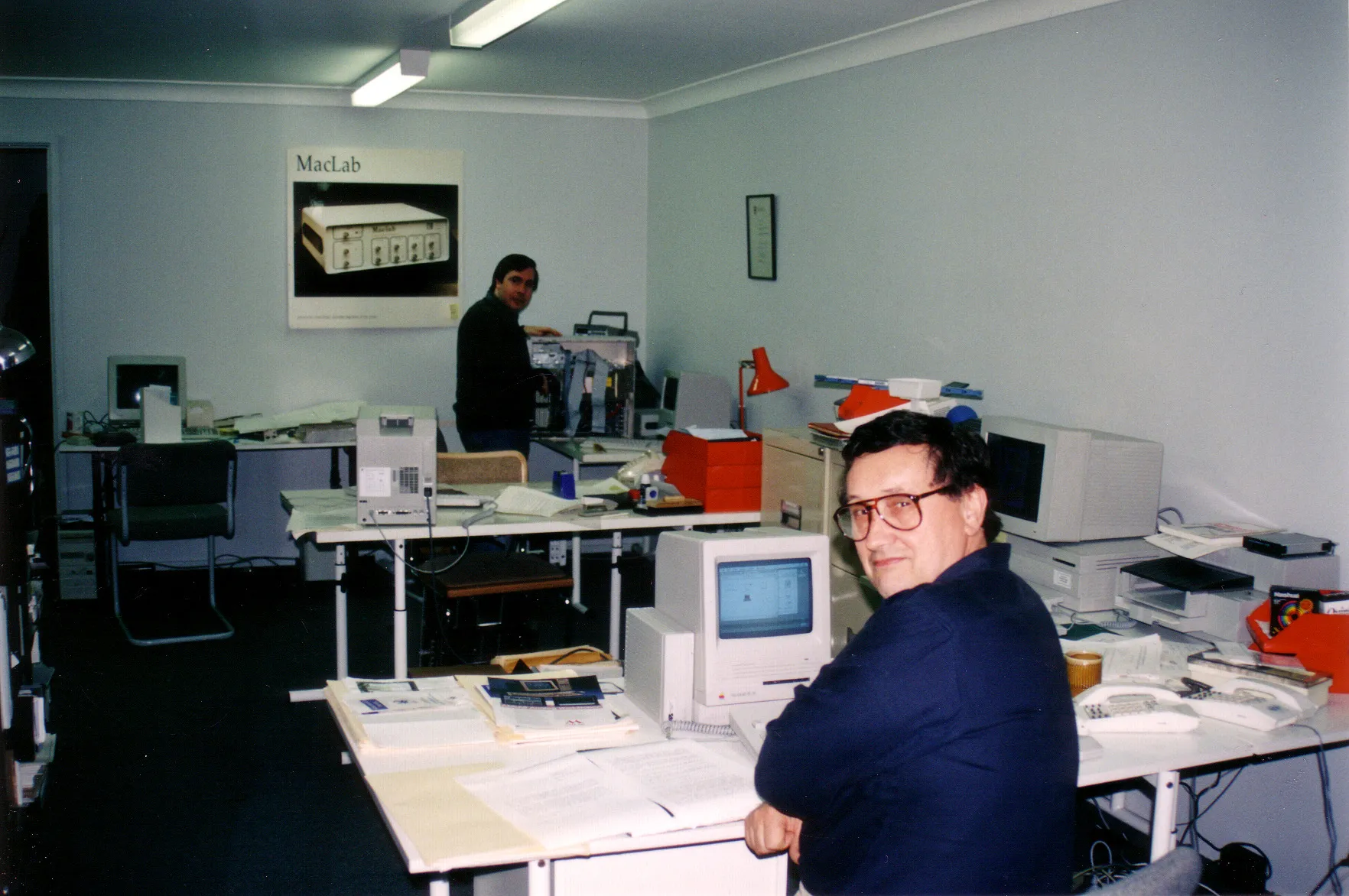
Boris Schlensky in the ADInstruments Sydney Office in the 1980s
Together, Boris and Michael decided to keep the manufacturing and marketing of the MacLab in-house, giving the team total control over the quality of the product they were putting out. Boris's hardware design and manufacturing skills, alongside Michael's software development, made them an unbeatable team. The international nature of the physiology community meant that ADInstruments was a global company from the very beginning, and the more control the team had in production, the more confident they could be sending those products off to labs around the world.
Graham Milliken had been working with Boris in electronic engineering since he’d finished university, and it was Boris who convinced him to take the leap and take over manufacturing for ADInstruments. Boris was a skilled negotiator and motivator and Graham remembers him as having a remarkable ability to convince others to get onboard. It was a perfect storm of coincidences. The right people, with the right skills, at the right place, at the right time, during the pre-Internet computer revolution.
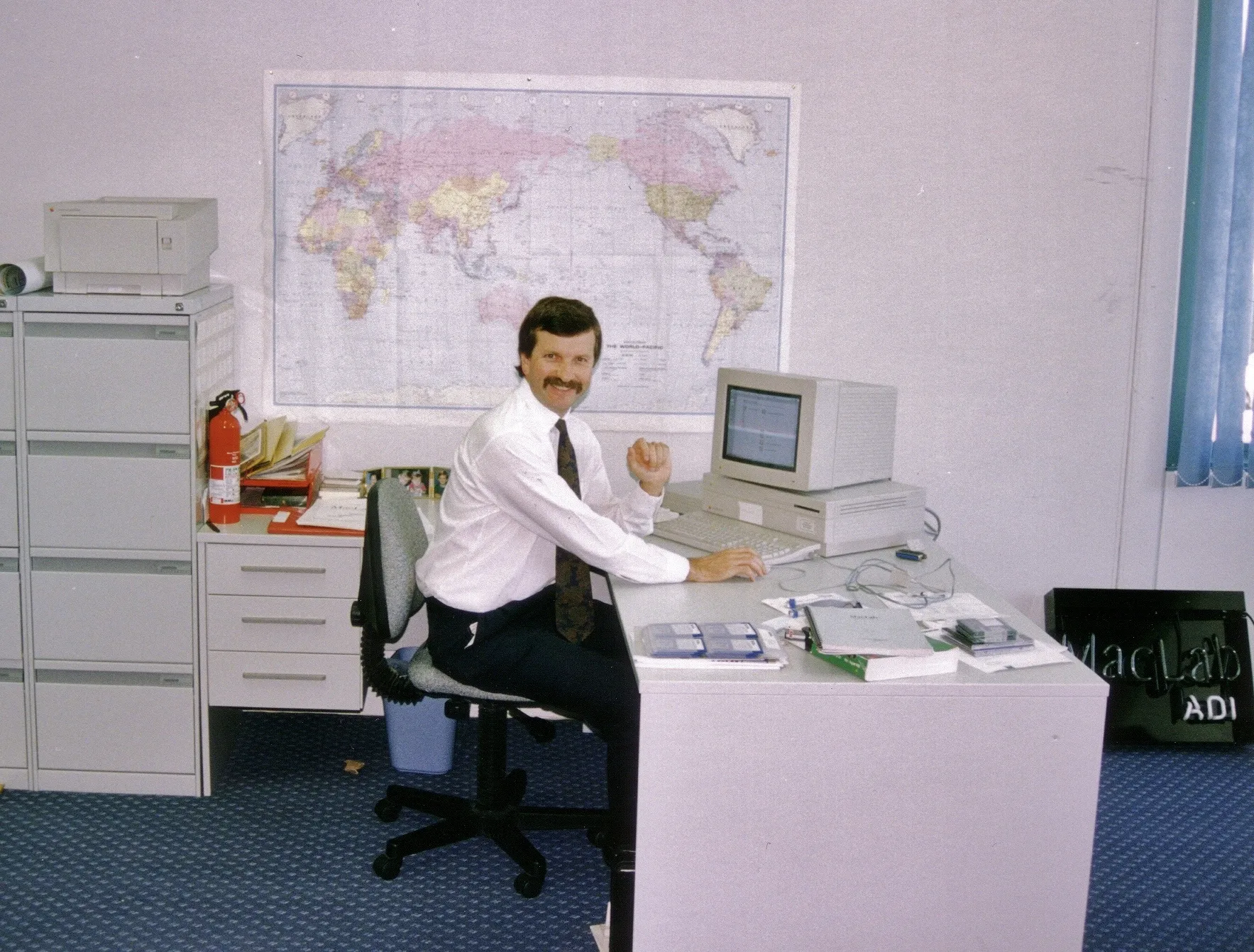
Graham Milliken in the ADInstruments Sydney Office in the 1980s
When the Mac was released in 1984, Michael saw it as the way of the future. He had wanted to write software for the Mac, but it was so new that no one was doing it yet. The University of Otago, however, did purchase the Apple Lisa computer, the first mass-market computer system with a graphical user interface, giving Michael the opportunity to start developing within this more user-focused format. The relative newness of the Mac meant a closer working relationship between ADInstruments and Apple than would have been possible with contemporaries like IBM.
The team’s first big physiology order came from the University of Melbourne. At the time, it was huge, with 65 companies from around the world competing for the tender.
“The process was incredibly hard fought,” Graham says, “but what gave us the edge was the fact that Michael could deliver software features overnight, and Boris was supporting the design of the new hardware they needed. We were also very confident, knowing that we had a great solution.”
“They were demanding a very high-end engineering solution, but it had to be one that was easy for non-computer people to use,” he explains, “and Michael is a genius at user interface. Watching him work in that area is
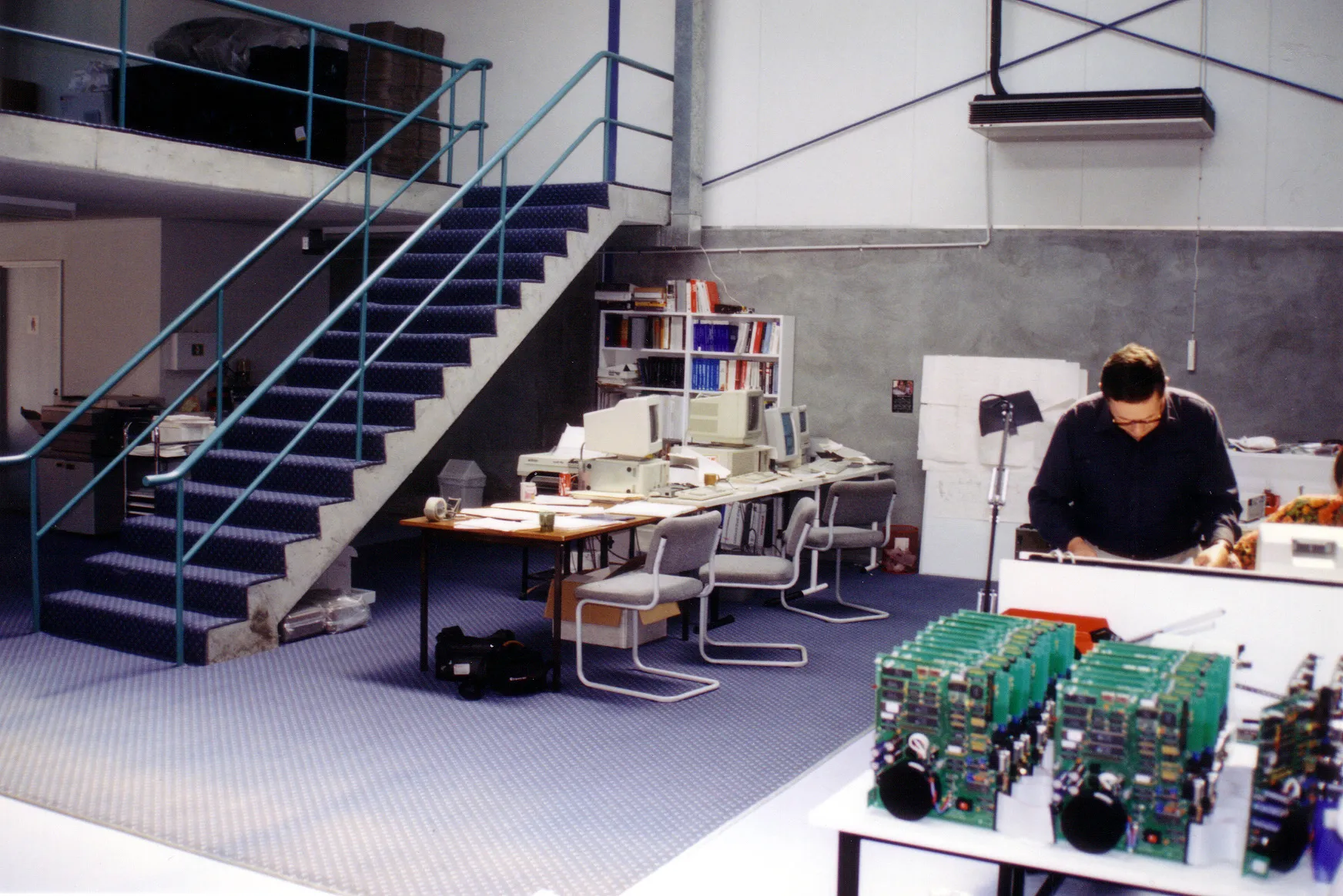
Boris Schlensky manufacturing MacLabs in the 1980s
almost like a concert performance. He has an amazing understanding of creating usability. He’s always asking: ‘Does this make sense to the customer?’”
The final hurdle was getting the MacLab system to interface cleanly with the University of Melbourne’s internal file network. It was a complex issue, and a fresh one, evolving out of the introduction of so many new technologies at once. That existing relationship with Apple, however, gave the team access to technical assistance for high-level issues. Working with some of the top technicians at Apple, alongside Apple’s Head of Education, they were able to find a solution. And, in the end, ADInstruments won the tender.
Looking back after 40 years, it can feel inevitable that ADInstruments would be here, but those four men didn’t have the luxury of foresight. They just had to believe in what was in front of them. Every move was a choice to trust in the products they had developed, their ability to meet the needs of scientists, and to believe that if they focused on producing technology that made scientists' lives easier, then the work was worth the stress.
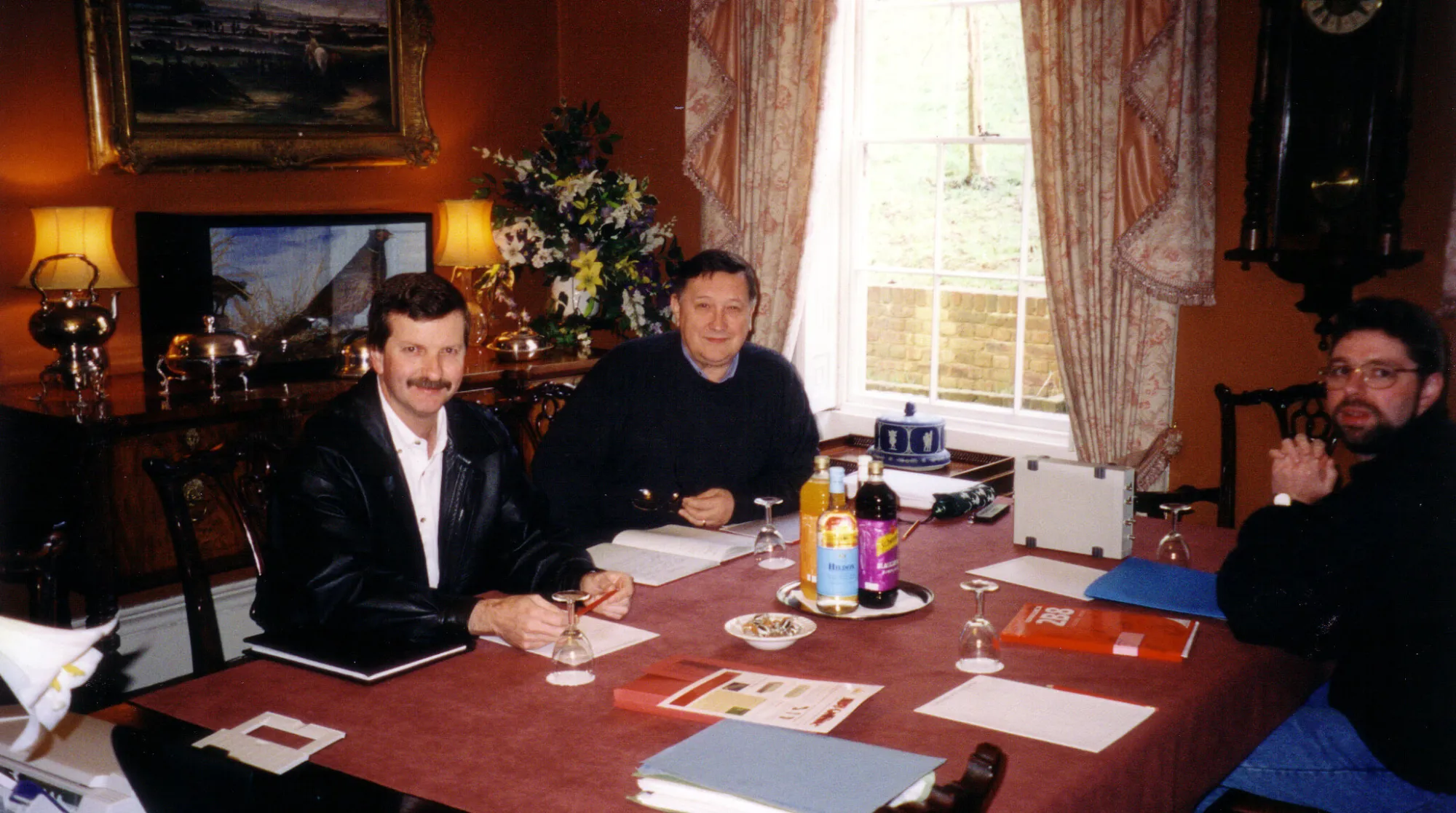
Graham Milliken (left), Boris Schlensky (centre), and Michael Macknight (right)
“It’s pretty simple, really,” Michael says, “if you do the right thing for your customers, you create something that solves a real problem in their lives at a price that makes sense for them, then you have a viable business. And if you continue to do that decade after decade, that puts you in a good position in business.”
“When I’m weighing something up or trying to make a decision, I ask myself what I would want if I were the customer. I want to be the kind of company that we would want to deal with. Then the decision or the answer to any question becomes clear.”
“It’s also important, and Tony really believed in this, that ADInstruments must give back to science. Sponsorships, scholarships, and awards are something we try to do as consistently as we can. The founders - Tony, Boris, Graham and I were all unified in this belief from the very beginning. Our customers and the science community must feel supported by us. We are in this with them - helping them to do the work and find the answers they are looking for.”
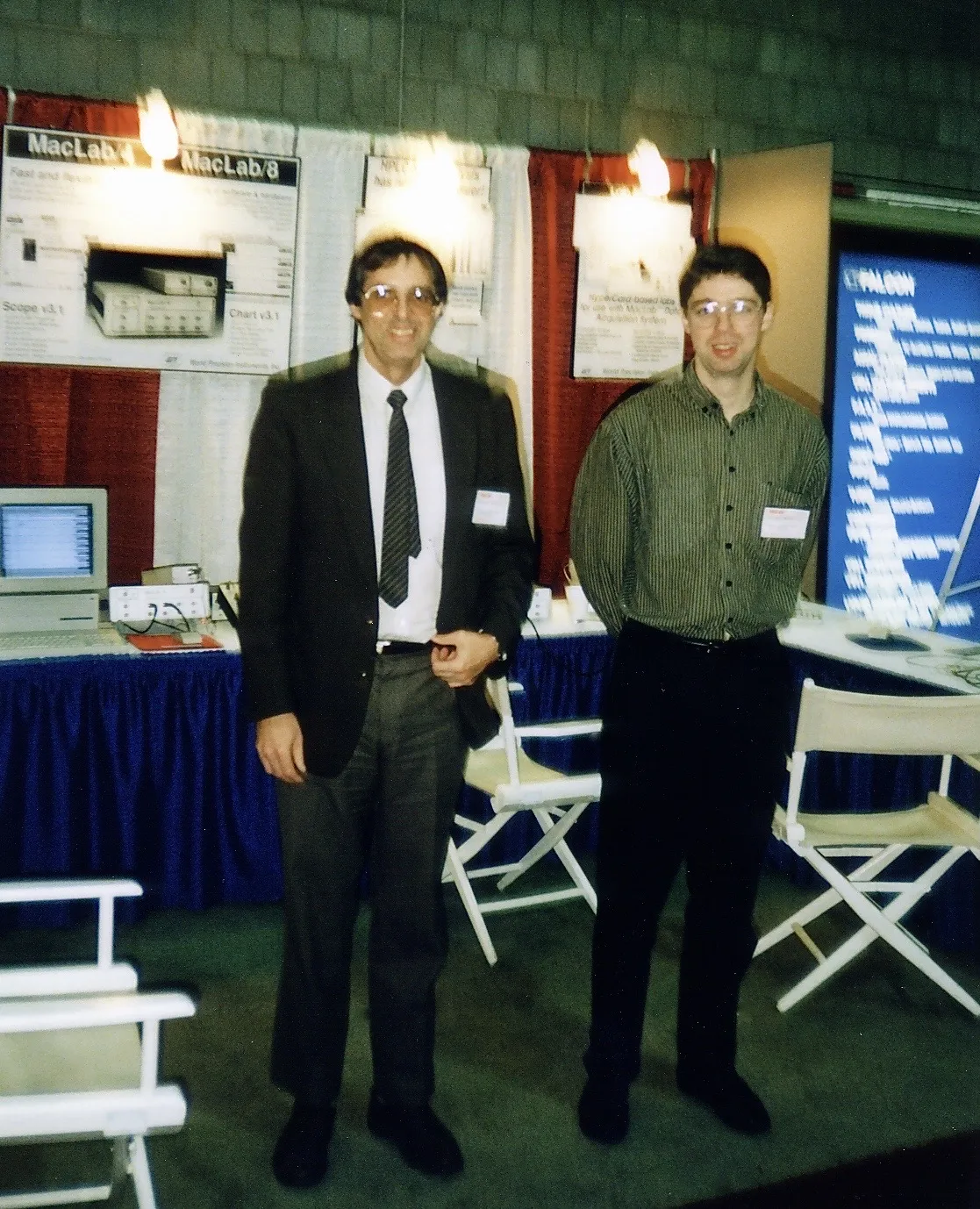
Tony Macknight (left) and Michael Macknight (right)