

While the use of telemetry in small animal research studies offers a wide range of benefits, it’s no secret that surgical experience can be a hurdle for many. Successful telemeter implantation requires surgical skills and training to ensure proper placement for reliable data collection and maintaining animal welfare.
Aware of these challenges, ADInstruments teamed up with InsideScientific to sponsor the Excellence in Small-Animal Surgery and Telemetry Research Training Program. This workshop was dedicated to equipping researchers with the knowledge and skills they need for telemeter implantation in rodents. Hosted by expert instructors, Dr. Christopher West & Dr. Oliver Wearing, this two-day workshop guided participants through hands-on surgical practice in the state-of-the-art rodent surgery facility of the Translational Integrative Physiology Laboratory at the University of British Columbia Okanagan.
We had the opportunity to sit down with Olivia Tran, a Research Scientist at the US Army Institute of Surgical Research (USAISR), to discuss her experience at the workshop this past November. Read on to learn more about her motivation for attending and the impact this workshop will have on her work moving forward.
Surgical Skills & Animal Survival
In her current role at the USAISR, Olivia’s focus is on polytrauma and hemorrhagic research using small animal models. The benefits of telemetry stood out to her lab for multiple reasons. The ability to work with conscious, freely moving animals and collect physiological data across extended periods of time was ideal for their ongoing studies.
Related: The Benefits of Using Telemetry in Research
After her lab purchased a Kaha telemetry system, Olivia learned about the training workshop from a colleague. She was drawn to the opportunity in order to further develop her own surgical skills.
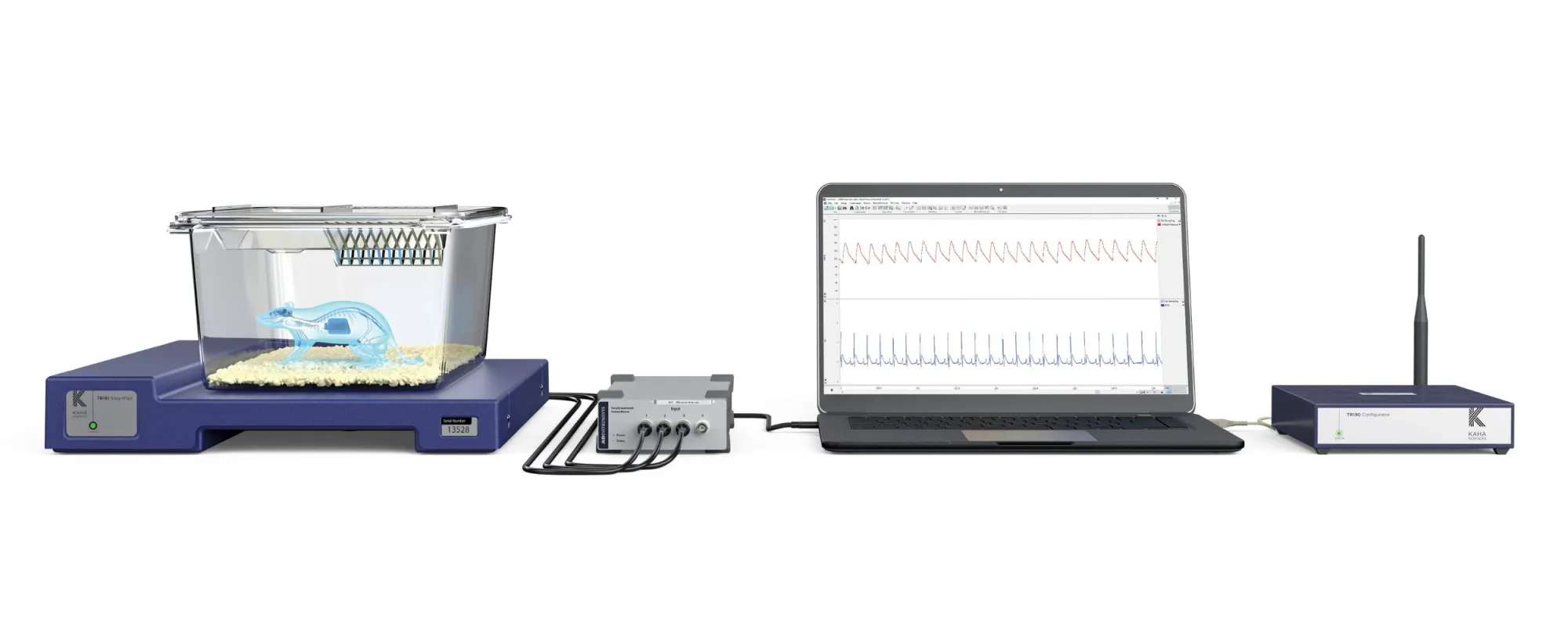
Kaha System Single Cage Set Up
“I have many years of experience working with rats, but I wasn’t the person who would perform the surgery. I just graduated from my PhD studies, where I assisted during surgery. Since I joining this lab, I’ve performed hands-on surgery only a few times. I’m not completely new with it, but I’m not an expert when it comes to rat surgery.”
Beyond expanding her surgical experience, she was eager to develop her understanding of best-practice surgical and post-surgical methods to improve animal welfare.
“Learning how to perform the implantations the right way and not wasting the animal,” she notes when reflecting back on why she wanted to attend. “Animal survival was my primary motivation.”
Related: Download our free guide: Prioritizing Animal Welfare in Telemetry Research
Guided Training from Experts
Over the course of the two-day workshop at UBC Okanagan, Olivia participated in a series of interactive seminars, live demonstrations, and hands-on surgical practice under the guidance of expert rodent surgeons - Dr. Christopher West and Dr. Oliver Wearing.
“Chris and Oliver were really helpful and informative. They were also really friendly and willing to answer any questions that we had! They were absolutely the best fit for teaching this workshop.”
The opportunity to enhance her surgical proficiency was invaluable. Additionally, the program covered proper aseptic preparation, anesthesia and analgesia administration, and post-surgical monitoring care.

Dr. Christopher West

Dr. Oliver Wearing
Since her lab had only recently purchased the Kaha telemetry system and they were still working to integrate it into future studies, the training also provided Oliva the opportunity to become more familiar with the equipment.
“The workshop was my first time being exposed to the equipment…It was straightforward to set-up and connect with the implants! The instructors did a good job explaining everything in detail.”
Key Takeaways
With the knowledge and training she acquired from her time at the workshop, Olivia explains that she’ll have a more “hands-on” role moving forward in any Kaha telemetry work her lab may conduct. Since she attended the workshop alongside a colleague, they will likely be the ones to perform the telemeter implantations in the future.
Following her experience at the training, she recommends it as an excellent opportunity for anyone looking to develop their essential small animal surgical skills. “The workshop will also help if you want to do any kind of surgery for cannulation,” Olivia explains. “Part of the telemetry training is cannulation, you put it in the blood vessel. So I tell people all the time that if you want to learn how to do small animal surgery, this workshop would be great. Chris also teaches you how to suture and how to isolate blood vessels - all of which are important skills for other surgeries as well.”
Enhance Your Surgical Proficiency
The Excellence in Small-Animal Surgery and Telemetry Research Training Program has since concluded. For those interested in receiving surgical training, contact the ADInstruments team regarding our surgical training opportunities here.
ADInstruments would like to thank Olivia Tran for taking the time to speak with us regarding her experience at the workshop.
We wish her and her lab at USAISR the best of luck with their future studies.