
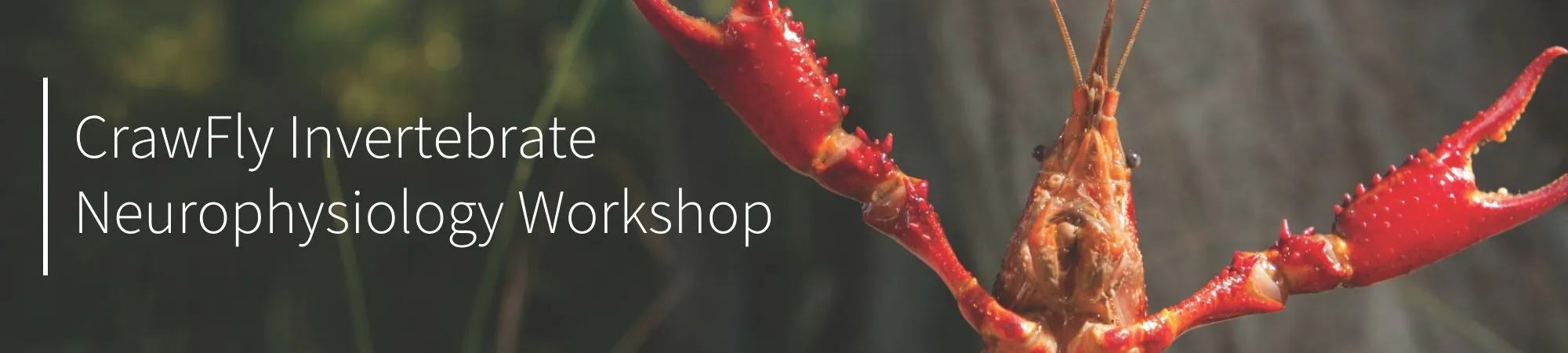
CrawFly Invertebrate Neurophysiology Workshop Overview
The CrawFly Invertebrate Neurophysiology Workshop at Cornell University, an Ivy League University located in Ithaca, New York, United States, is dedicated to training faculty members and instructors on a range of popular and cutting-edge neuroscience techniques. Participants have come from throughout the United States as well as internationally. The primary goals of this training workshop are to enhance student coursework while effectively demonstrating principles in undergraduate neuroscience.
To promote a diverse group of attendees, ADInstruments sponsors scholarships aimed at supporting educators around the world who are leading efforts to increase opportunities for those underrepresented in Science, with the award including registration to the CrawFly workshop. The team of instructors for the CrawFly Workshop evaluate all scholarship submissions, and select the awardees.
Each year during the academic Summer break (June/July), ADInstruments and Cornell University co-host this intensive five day workshop equipped with the latest ADInstruments hardware and software. The first section of the course is based on the original National Science Foundation funded Crawdad Project, and we are proud to offer all course participants expert hands-on instruction from Ron Hoy (Cornell University), Bruce Johnson (Cornell University), and Bob Wyttenbach (Emory University), who all have extensive experience teaching neurophysiology. During this section, we explore concepts such as synaptic connectivity and plasticity, ionic basis for membrane and action potentials, evolution of excitability, and much more, with hands-on exercises and user-friendly software helping workshop participants focus more on the science behind their data and less on data acquisition.
The second section covers neuro-electrophysiology methods as well as optogenetic approaches using Drosophila melanogaster. In addition to Crawdad section’s instructors, Drosophila neurobiologists Karen Hibbard (Janelia Research Campus), Illya Vilinsky (University of Cincinnati), and David Deitcher (Cornell University) demonstrate student friendly exercises based on optogenetic and thermogenetic activation of neural circuits in Drosophila. Attendees practice these protocols as well as techniques to visualize the Drosophila nervous system using fluorescent microscopy.
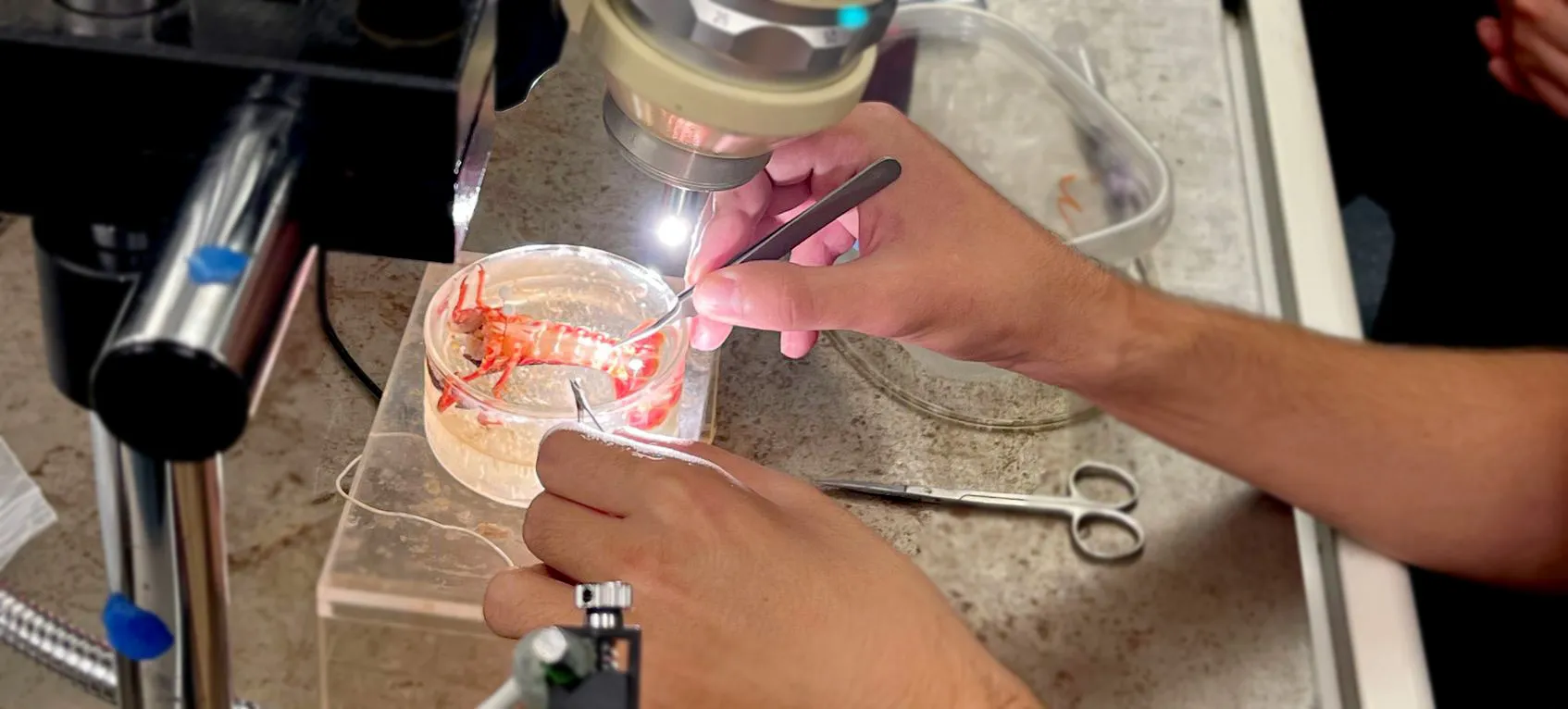
The CrawFly workshop aims to provide educators hands-on experience with invertebrate preparations
Upcoming Workshops:
The next workshop will be held June 8th - 12th, 2026 at Cornell University. Learn more and secure your seat now.
Instructors
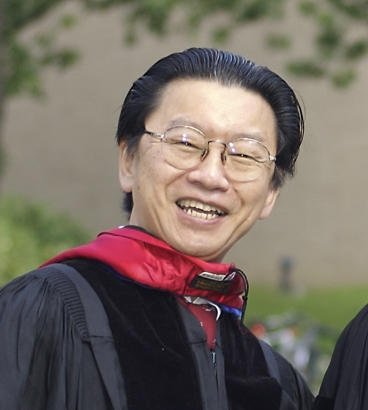
Dr. Ron Hoy
Professor, Cornell University
Dr Hoy studies the neuroethology of acoustic communication in insects with the NB&B department at Cornell. This includes a study of the biophysics and neurophysiology of hearing, as well as an analysis of the behavioral response to salient acoustic signals. Under his leadership the multimedia rich Crawdad Project was developed at Cornell to the benefit of invertebrate neurobiology focused educators everywhere and formed the framework for educator workshops and curriculum development across North America including the Classroom of Excellence.
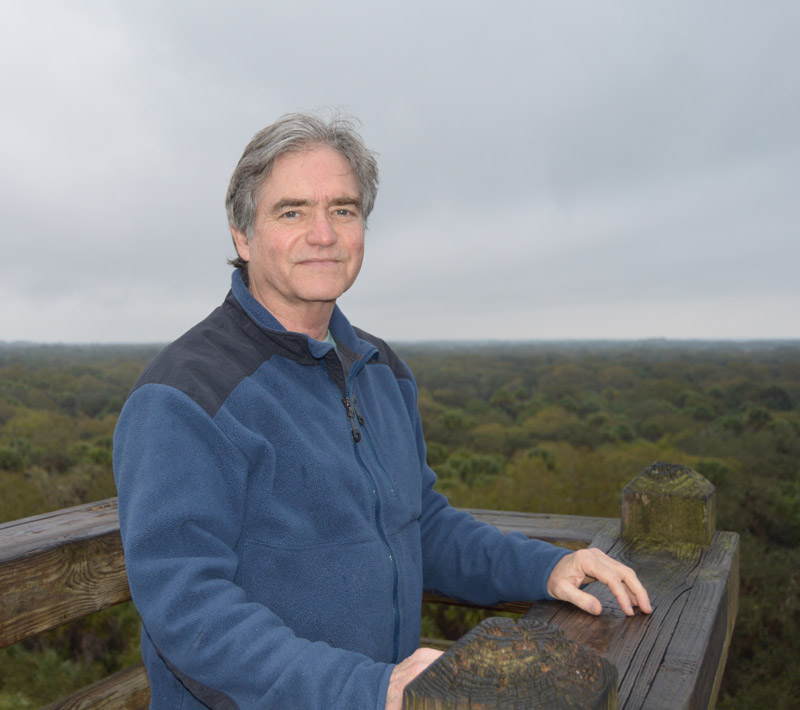
Dr. Bruce Johnson
Senior Research Associate, Cornell University
Dr Bruce Johnson is currently a Senior Research Associate with the Harris-Warrick Lab in the Department of Neurobiology and Behavior at Cornell University. Bruce under the guidance of Dr. Ron Hoy hosted the first series of NSF-funded Crawdad workshops and has an extensive background in neurobiology research and education from his past and current affiliations with the MBL, Shoals Marine Lab, PKAL and FUN.
Dr. Robert Wyttenbach
Senior lecturer in Neuroscience and Behavioral Biology, Emory University
Bob Wyttenbach is a senior lecturer in Neuroscience and Behavioral Biology at Emory University. He has spent much of the last 15 years developing educational materials in neurophysiology, perception, and animal behavior. His research interest is insect hearing.
Dr. Ilya Vilinsky
Educator Associate Professor, University of Cincinnati
Dr. Ilya Vilinsky obtained his PhD at Cornell University, where he studied the mechanisms of synaptic transmission using the tools of Drosophila genetics. Currently, he is director of the Undergraduate Neuroscience major at the University of Cincinnati, where he teaches neurobiology and electrophysiology. A key goal of his program is to develop teaching techniques integrating modern molecular genetics with neuronal physiology. He has participated in FUN summer workshops, demonstrating electroretinography on Drosophila and other invertebrates as a teaching tool for neurophysiology labs.
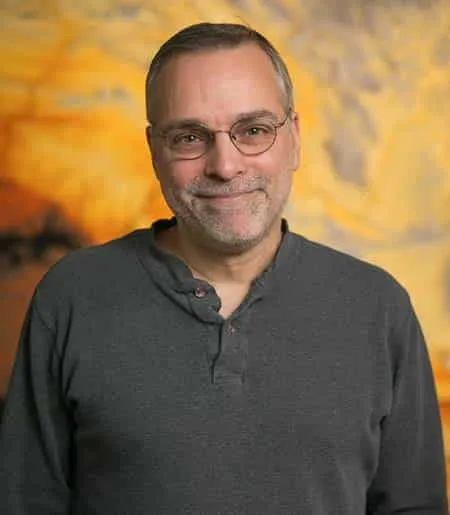
Dr. David Deitcher
Associate Professor, CORNELL UNIVERSITY
Dr. David Deitcher obtained his PhD in Genetics at Harvard Medical School. He has worked in the Department of Neurobiology and Behavior at Cornell University for over 20 years, where his lab works to investigate the use of Drosophila as a model for studying epilepsy and motor behavior. Dr. Deitcher also teaches a Molecular and Genetic Approaches to Neuroscience course at Cornell.

Dr. Karen L. Hibbard
Fly Facility Lead for Lab and Visitor Projects
Dr. Karen Hibbard is currently a Research Specialist in the Shared Resource Fly Facility at HHMI’s Janelia Research Campus where she has worked since 2006. As a graduate student at The University of Notre Dame, Karen studied genes that affected the maturation and transport of Rhodopsin in Drosophila. At Janelia, she generates complex transgenic Drosophila stocks and teaches Drosophila genetics to researchers. She also coordinates the utilization of fly facility personnel and resources to fulfill the needs of researchers and their projects.

Dr. Patrick Sonner
Instructor and Director of Undergraduate Neuroscience Education, Wright State University
Dr. Patrick Sonner obtained his Ph.D. at Wright State University where he studied central nervous system control mechanisms for cardiovascular regulation under normal and hypertensive conditions. During his postdoc, Patrick proceeded to study the development of spinal circuits that regulate locomotion. Patrick was recently hired as a faculty member at Wright State University and is focusing on developing the curriculum and courses for a new undergraduate neuroscience major. Patrick is an alumni of the CrawFly workshop and will be overseeing the LinkedIn group for CrawFly/Dad alumni.
"The neat thing about CrawFly is that you’ve got folks who have been doing these preparations for 40+ years, they are experts at being able to do this. So if you are going to learn from anybody, nobody knows it better than them!"
Cord Brundage
University of Wisconsin
Curriculum Overview
Introduction to Passive Membrane Properties
Current flow in model neurons
Organization of a Small Motor System
Extracellular recording of spontaneous and reflex motor activity; neuroanatomy of a motor system
Action Potential Speed
Extracellular recording for conduction velocity measurements from multiple axons simultaneously
Motor Pattern Generation
Extracellular recording of a rhythmic motor pattern generator; timing and phasing of neural activity
The Membrane Battery
Intracellular recording to examine the ionic basis of the resting potential
Synaptic Connectivity
Simultaneous extracellular nerve and intracellular muscle recording to match pre - and post-synaptic potentials
Synaptic Plasticity
Simultaneous presynaptic nerve stimulation and intracellular synaptic potential recording to examine short-term, intrinsic synaptic plasticity
Response Properties of a Model Sensory System
Extracellular recording from a muscle receptor organ
Principles of Neurogenetics
Visualization of the Drosophila nervous system and muscle innervation using the GAL4-UAS system and Green Fluorescent Protein
Remote control of neural circuits in behaving animals
Optogenetic and thermogenetic activation of neural networks using channelrhodopsin-2, TRPA1 and the GAL4-UAS system, behavioral and physiological recordings
DIY Neuroscience Hardware
Parts sourcing for and assembly of low-cost headstage micromanipulators, LED controllers, and fluorescence microscopes

"The workshop exceeded even my high expectations. Not only was I able to learn multiple preps in the crawdad and snail to illustrate important principles in physiology, but I was able to make strong connections with faculty from all around the country that will help improve my teaching for years to come. I am grateful for having had the opportunity to partake in the workshop, as the skills and the knowledge I've gained will be a great asset for me down the road."
Joost Monen
Cornell University
ADInstruments Neuroscience Educator Scholarship
The ADInstruments Neuroscience Educator Scholarship is offered annually to faculty members, teaching staff, and postdoctoral fellows who wish to attend the CrawFly workshop. Awardees are selected by a Scholarship Evaluation Committee and receive complimentary registration to the workshop along with a stipend to help with travel expenses. Prior Scholarship recipients include:
- Cord Brundage, University of Wisconsin - La Crosse, United States
- Genevieve Bell, Centre College, United States
- Isabella Maita, University of California - San Diego, United States
- Sarah Latchney, St. Mary's College of Maryland, United States
- Shannon Eaton, Arizona State University, United States
- Callie Newson, Utah State University, United States
- Lydia Bailey, Washington State University, United States
- T M Zaved Waise, University of British Columbia, Canada
Learn about CrawFly from a recipient of the Neuroscience Educator Scholarship...
Related Blog: Highlight of the semester - why CrawFly is the perfect training opportunity for those teaching neuroscience...
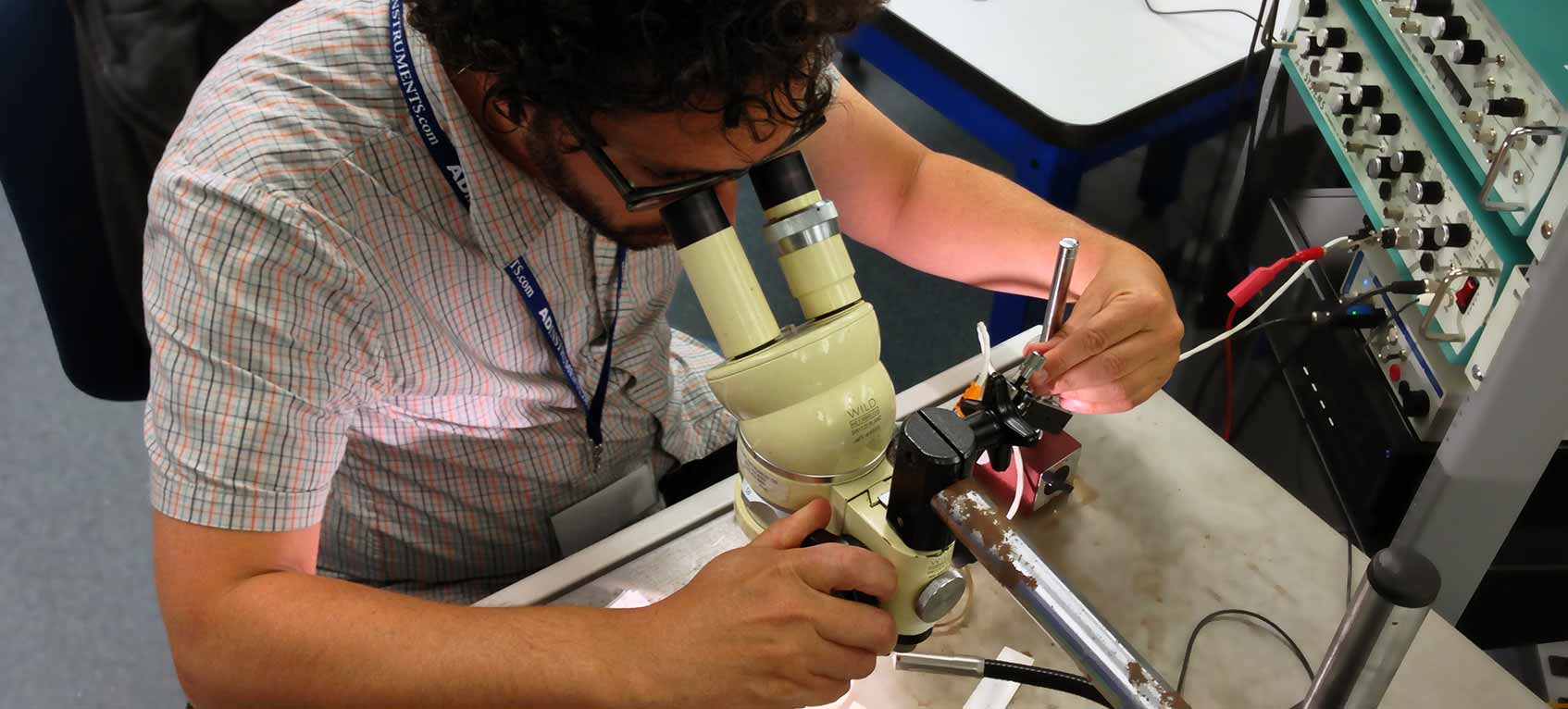
"If you’re trying to implement invertebrates into your lab work or into the classroom but you don't necessarily have people around you to help you or guide you, this is it. This is a great place to network, to get ideas, and to gain that knowledge of how to implement them in a classroom setting. It’s perfect."
Genevieve Bell
Centre College
Additional Resources
Listed below are various resources, websites, and pages available to support your neuroscience teaching. If you have additional questions regarding CrawFly or any of these resources, please contact us here.
Webinars
- Cornell CrawFly workshop recap
- Neuroscience Fundamentals Using Scope, Peak Analysis and Spike Histogram
Websites
- Cornell University Department of Neurobiology and Behaviour
- Janelia Farm
- TReND
- Faculty for Undergraduate Neuroscience
- FUN Equipment Loan Program
- Journal for Undergraduate Neuroscience Education
Hardware
LabChart Experiments
Download collections of LabChart teaching experiments for Animal Physiology, Biology, Human Physiology, Neuroscience and more.