

Based on our exclusive data, your peers use these labs the most. Find out the exact equipment they use for these physiology experiments and start teaching easily, inside and outside the lab.
1. Heart and ECG
>12,000 student runs in 2023
Students measure and analyze the ECG and pulse, and discuss the relationship between them. They then compare variations between the different leads of a 12-lead ECG, and perform an Einthoven triangle analysis.

Equipment used:
2. Muscle and EMG
>12,000 student runs in 2023
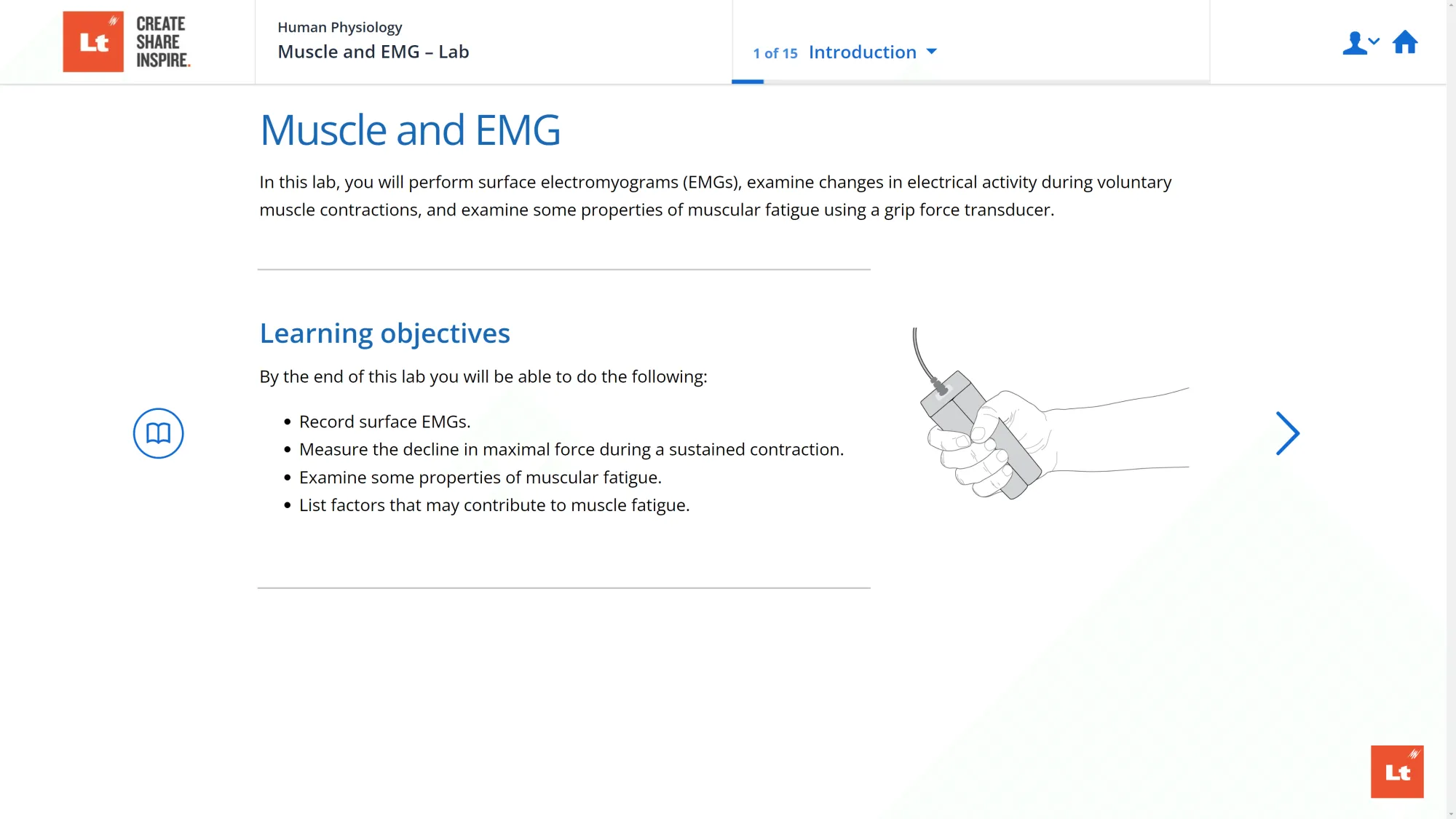
Students record EMG during voluntary muscle contractions and investigate how coactivation and contractile force changes with increasing demand. They measure the decline in grip force during a sustained contraction and examine muscle fatigue. Finally, they discover how visual feedback, verbal feedback, and rest impact our ability to sustain muscle contractions.
Equipment used:
3. Lung Volumes
>11,000 student runs in 2023
Students record and analyze spirometry signals to derive static respiratory parameters, such as lung volumes and capacities. They perform basic tests of pulmonary function and stimulate breathing with hyperinflated lungs.

Equipment used:
4. Blood Pressure
>10,000 student runs in 2023
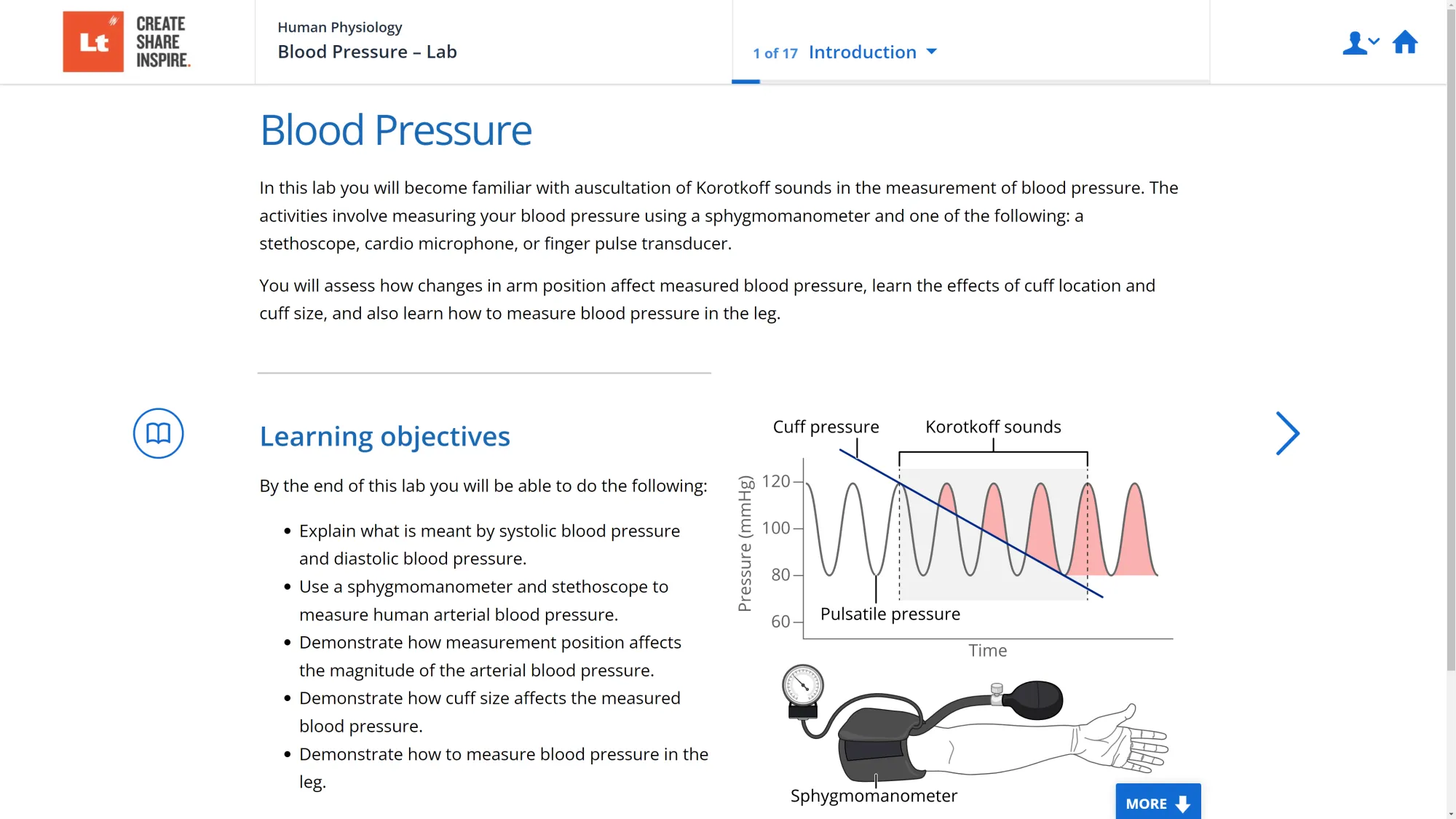
Students learn how to measure blood pressure with a stethoscope, blood pressure cuff and sphygmomanometer, then visualize changes during a measurement with a cardio microphone. They assess peripheral circulation changes with a finger pulse transducer, then examine the effect on blood pressure in the arm with changes in cuff location, cuff size, and arm position. Finally, students investigate how leg position affects leg blood pressure.
Equipment used:
5. Skeletal Muscle Function
>9,000 student runs in 2023
Students revise the basic types of contractions. They record and measure muscular twitch responses to nerve stimulation and observe recruitment as stimulus strength increases. Finally, they test the effects of stimulus timing on muscle twitch summation and tetanus.

Equipment used:
6. Reflexes and Reaction Times
>8,000 student runs in 2023
Students explore the similarities and differences of reflexes and reactions. Students first examine simple reflexes, and then examine their reaction times to stimuli under different conditions.

Equipment used:
7. Sensory Physiology
>7,000 student runs in 2023
Students familiarize themselves with their senses and experiment with sensory illusions. Learn how the body detects and perceives different sensations including touch, sight, taste, and movement. These activities are suitable for students at all levels, and can be performed without hardware.
![A screenshot of the Sensory Physiology Lab in Lt showing a painting by Louis-Leopold Boilly called Les cinq sens [The five senses].](/sites/default/files/styles/banner/public/2024-02/Lt%20Sampling%20Engine_Sensory%20Physiology.png.webp?itok=aKKqjykh)
Equipment used:
- NA
8. Heart Sounds
>7,000 student runs in 2023
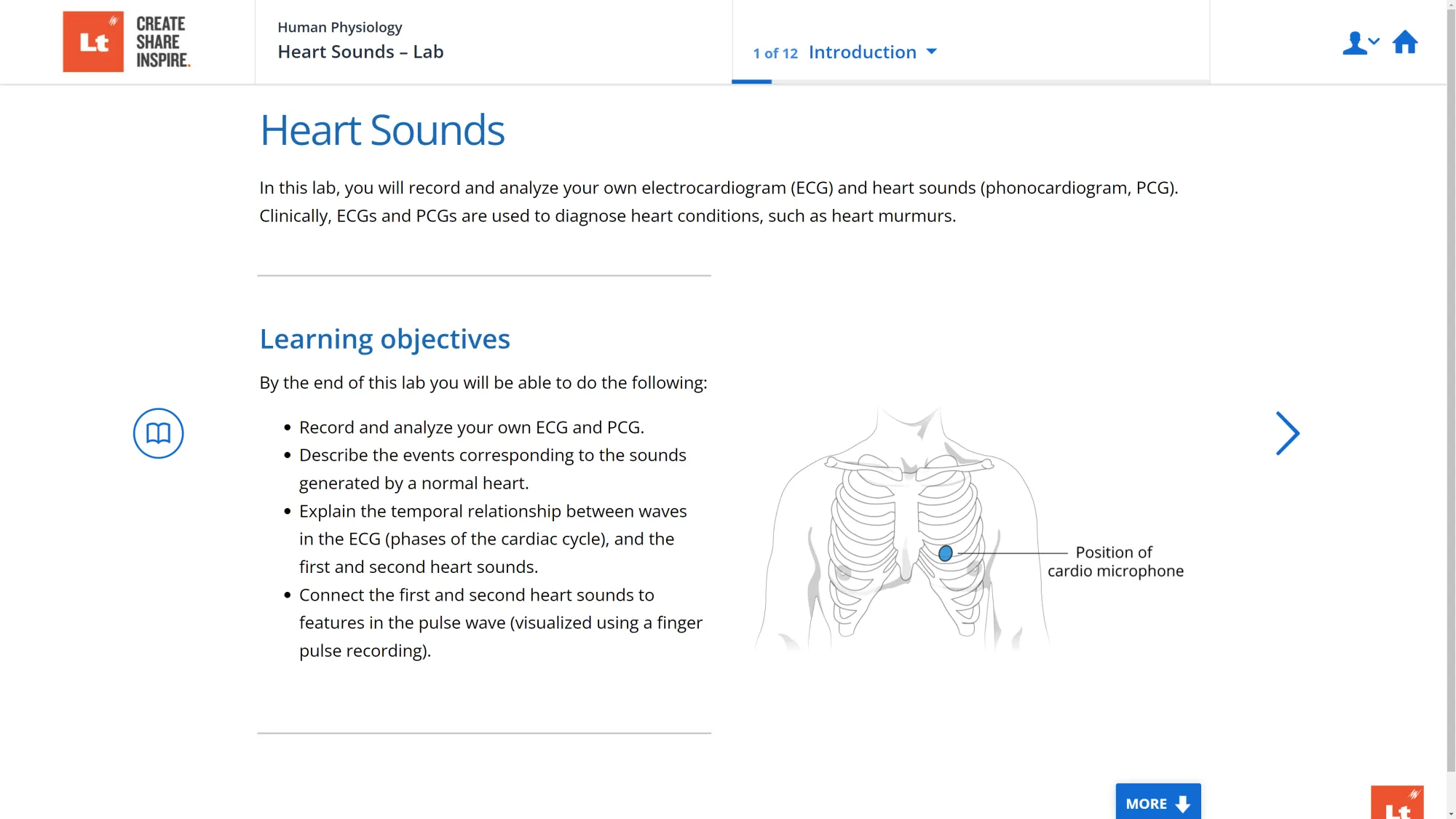
Students listen to heart sounds via a stethoscope by performing auscultation on a volunteer. They record and analyze an ECG in conjunction with a phonocardiogram (PCG) and pulse measurements. They investigate the timing of ECG events and peripheral pulse relative to heart sounds, to determine their relationships.
Equipment used:
9. Airflow
>6,000 student runs in 2023
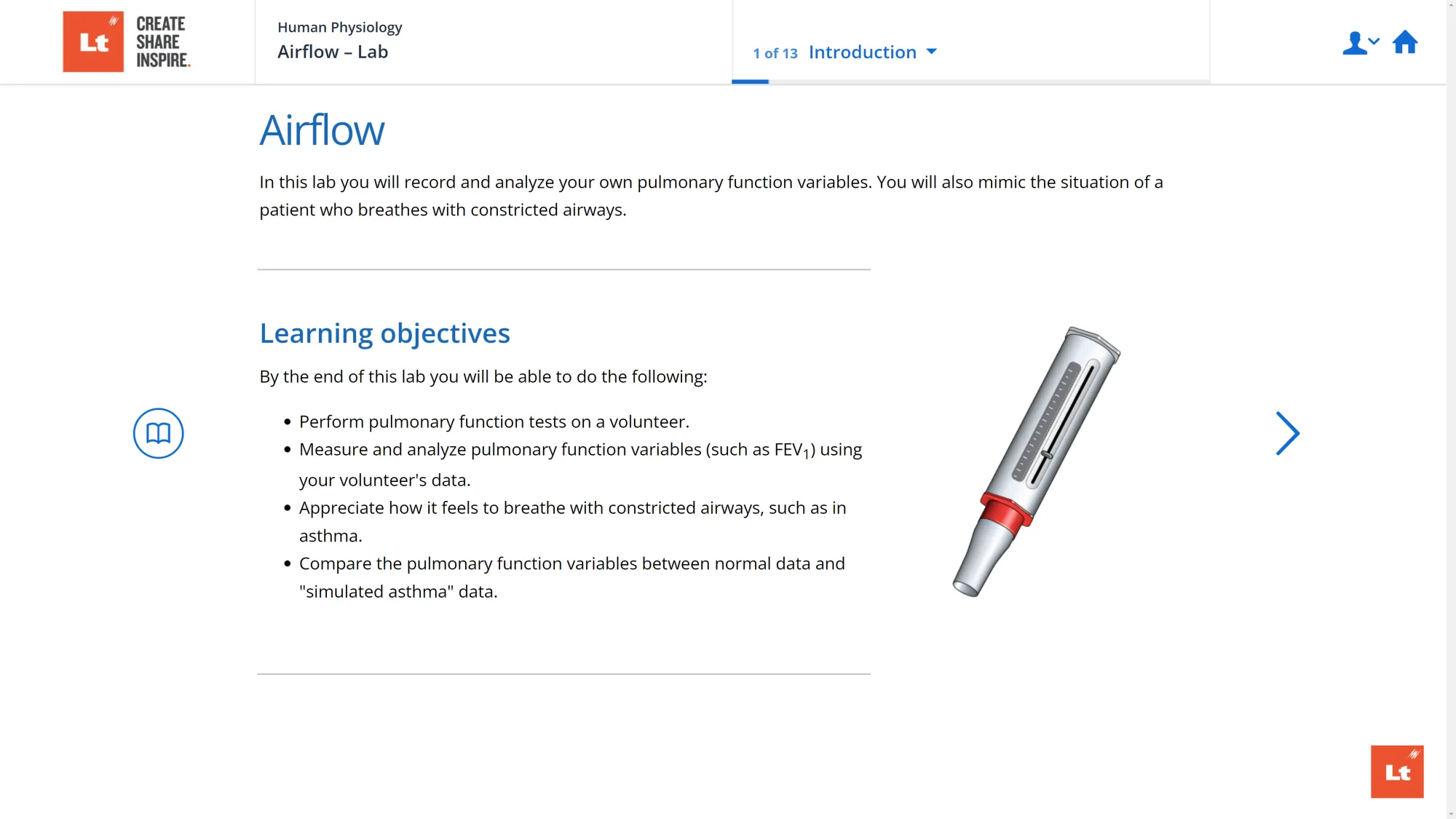
Students record spirometry signals and analyze these to derive dynamic respiratory parameters, such as forced expired volume in 1 second (FEV1). They compare these with parameters derived from a simulated airway restriction exercise. Students also learn how to perform peak flow tests to assess pulmonary function.
Equipment used:
10. Electroencephalography (EEG)
>6,000 student runs in 2023
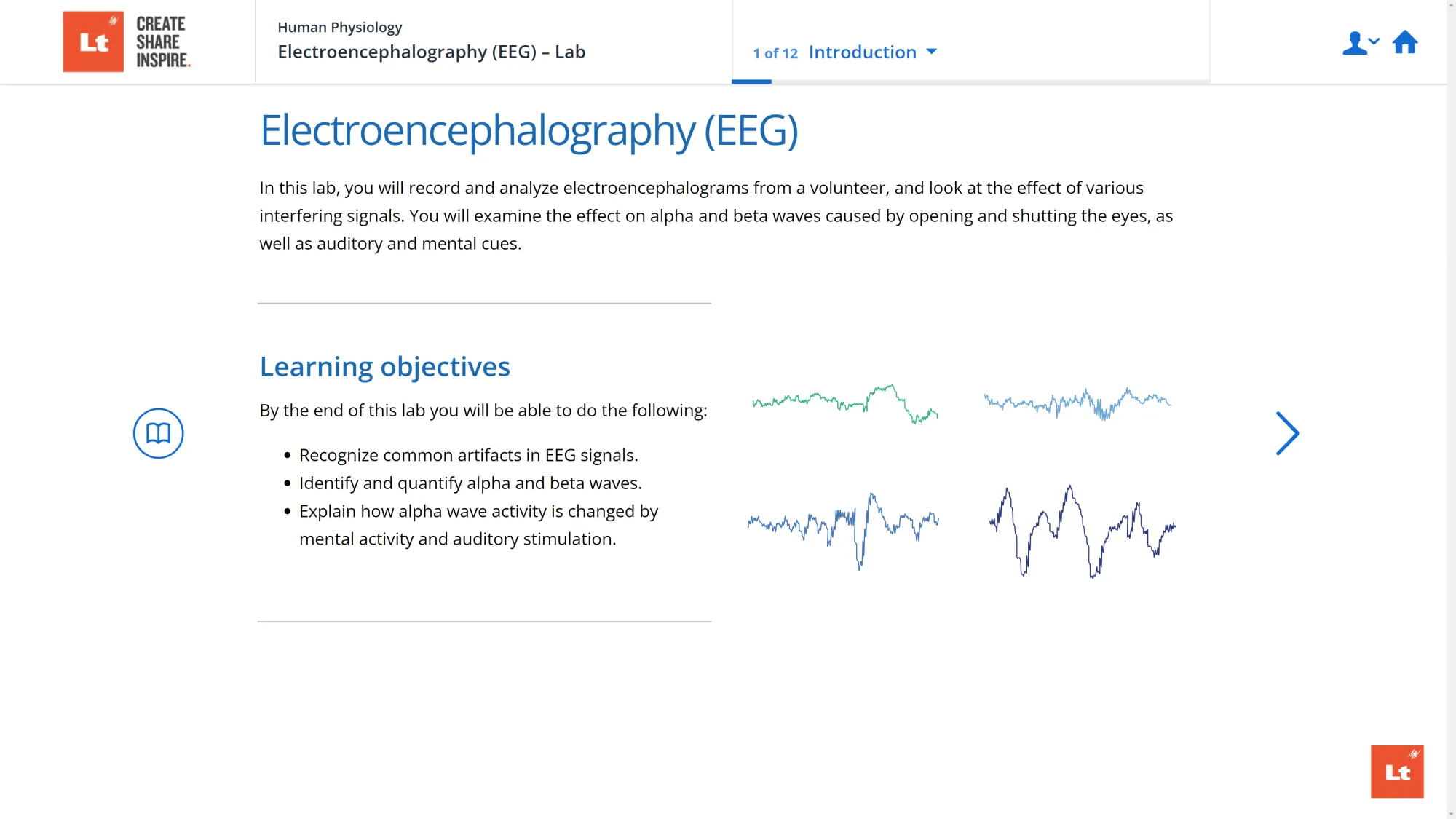
Students explore the electrical activity of the brain. They record electroencephalograms, and analyze the effect of various interfering signals: the changes to alpha and beta waves with eyes open and shut, and the effects of mental and auditory activity on alpha and beta waves.
Equipment used:
Ensure student satisfaction and success in your physiology class
Make teaching easier and more enjoyable - for yourself and your physiology students - with these effective, powerful sensors. Get in touch below - we look forward to helping you get started in your human physiology lab.
Our PowerLab Sensors Kits
PowerLab Sensors can be purchased individually or in our Core and Advanced Human Physiology PowerLab Sensor Kits. Each kit contains a different number of PowerLab Sensors which interface with a variety of labs from the PowerLab Sensor Human Physiology Collection.
Core Human Physiology Sensor Bundle
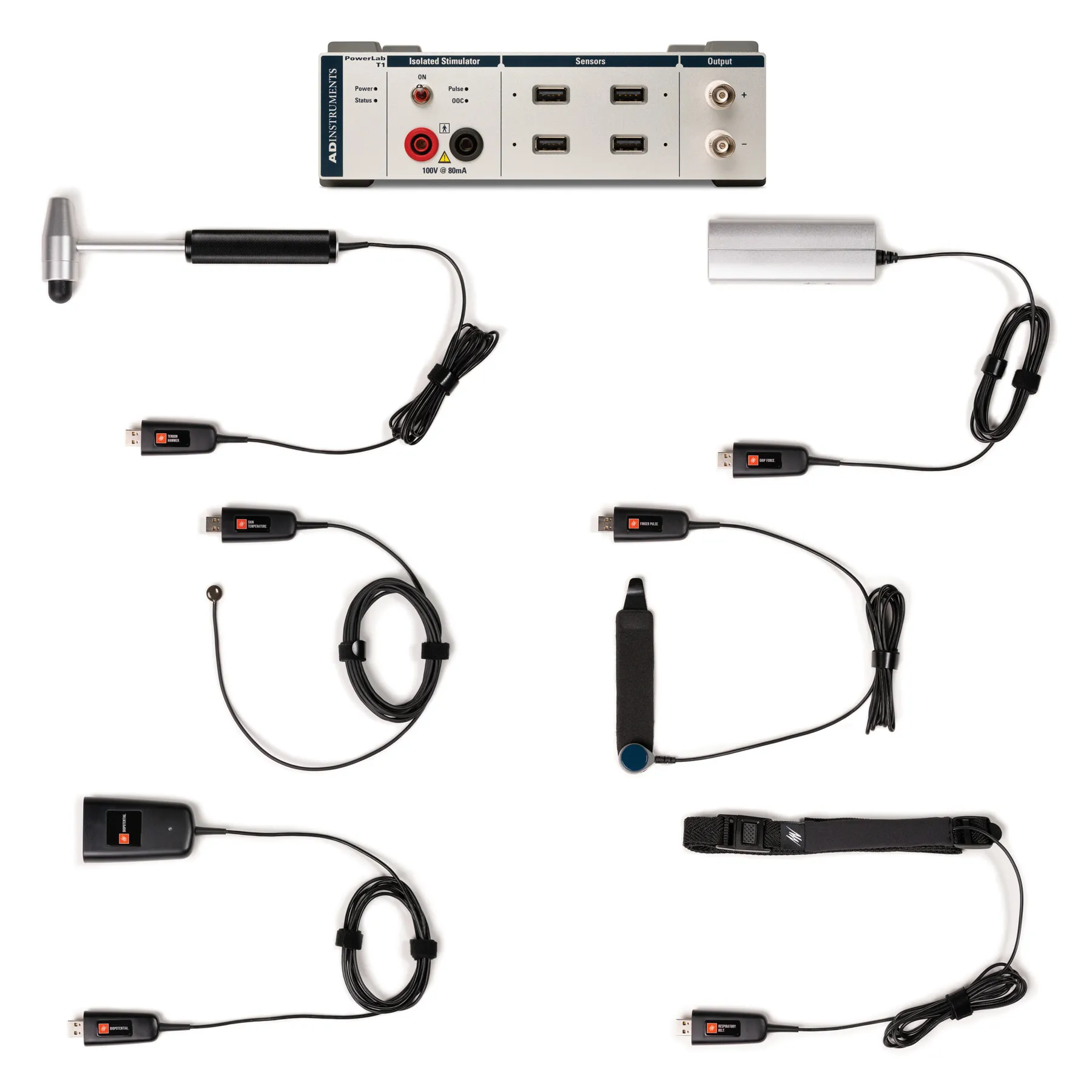
The Core PowerLab Sensors Bundle enables you to investigate a wide range of biological signals. It contains six sensors, a PowerLab T1, as well as accessories and consumables needed for data acquisition across many of our human physiology labs.
Advanced Human Physiology Sensor Kit

The Advanced PowerLab Sensors Bundle enables you to investigate all of the biological signals we offer. It contains nine sensors, a PowerLab T1, as well as the necessary accessories and consumables for data acquisition across our human physiology labs.