
Manchester Metropolitan University has been recognized as The Times and Sunday Times Modern University of the Year for 2026 and 2027, successes that follow a University-wide push to modernize teaching practices.

Not only has Manchester Met invested heavily in updating educational practices, but they’ve also introduced education-focused pathways for lecturers, supporting them to undertake active research in the educational best practices of their field.
Dr Liam Bagley took the leap into researching physiological education practices in 2019. Since then, he and Dr Gethin Evans have worked alongside their colleagues to bring the theatre of early physiology education back to the modern physiology lecture theatre.
Historically, physiology lectures were theatrical; with discussion, argument, live surgeries, and human and animal dissection. At the time, this theatre was the first exposure most doctors and scientists had to organ systems and their functions within the wider anatomical context. As physiology education has progressed, moving away from the mess and ethical quandaries of theatrical teaching, the benefits of that theatricality have also been lost. By abstracting physiology away from the physical, we make it harder for students to connect the concepts in a textbook to the functions working within their own bodies.

Rembrandt's 'The Anatomy Lesson of Dr. Nicolaes Tulp' from 1632 shows a more theatrical form of anatomy education.
We don’t need to bring back body snatching in order to revive practical physiological education; we just need to find a way to translate textbook physiology into memorable experiences.
Related: Getting the most out of dissection in anatomy teaching >>
Physiology should be, in theory, the most accessible of the sciences; it’s right there in your body. The benefit of active learning for physiology is in bridging the gap between the textbook and the body. “In physiology, it's right there and then and it's in [the student] as well.” Liam explains, “They can see how they respond physiologically to different things in real time. You can see that straight away on a student's face: they get it because it's there and then in front of them. It's the proper science of life.”
First Steps Into Active Learning
Alongside Dr Lisa Coulthwaite, Liam facilitated and examined the impact of two simulationist and active learning experiences; Live Labs and Experience Day.
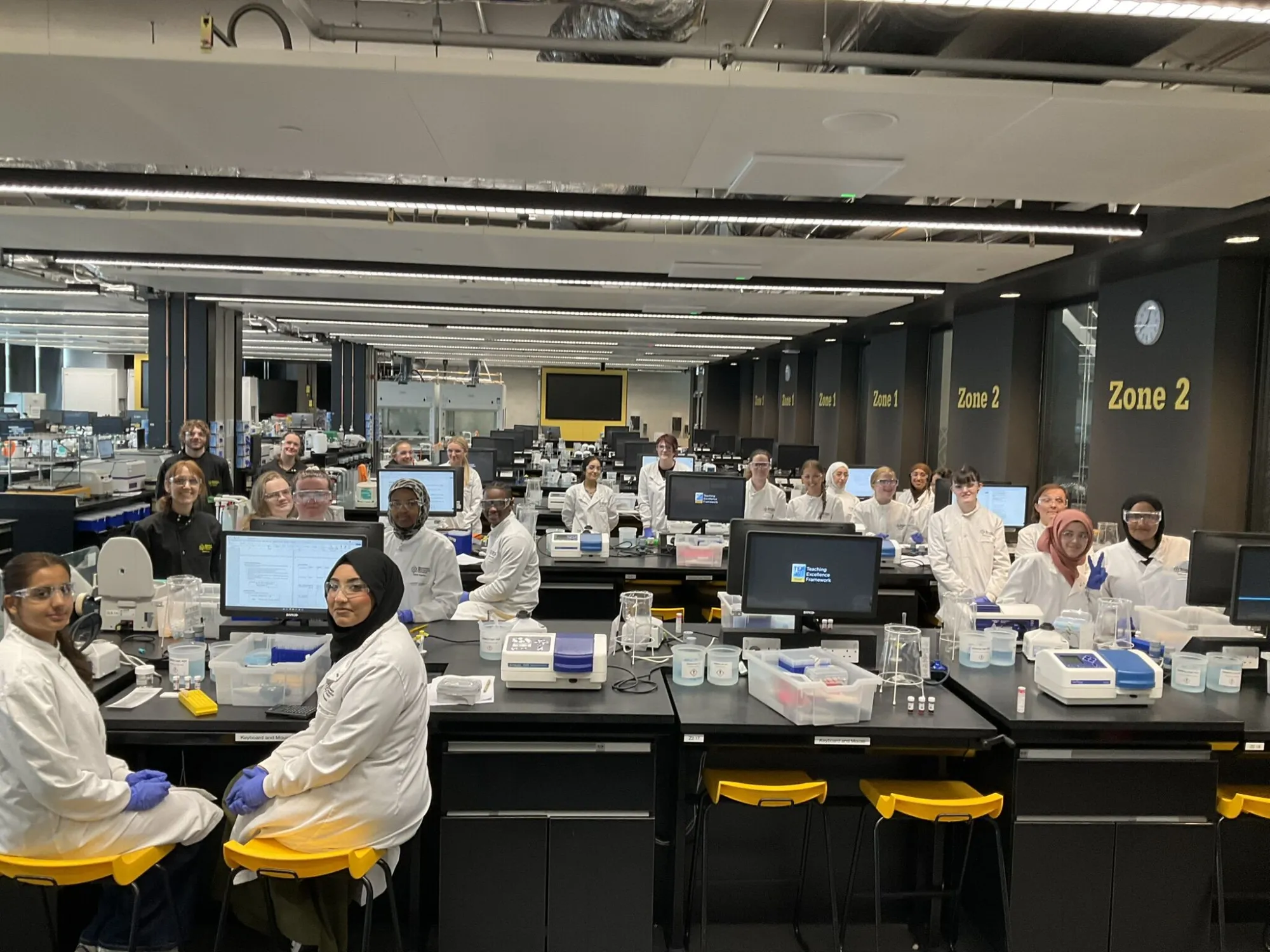
These activities brought employers and practitioners into the educational environment, giving students the opportunity to apply theory with hands-on activities similar to those they’d be performing in the workforce. The response was overwhelmingly positive, with students coming away feeling more capable and more prepared for their future careers. The main issue, and the feedback Liam received again and again, was that students wanted more opportunities to take part. They needed to implement more wide-spread active learning, and integrate it into their regular schedules.
Building the DEN
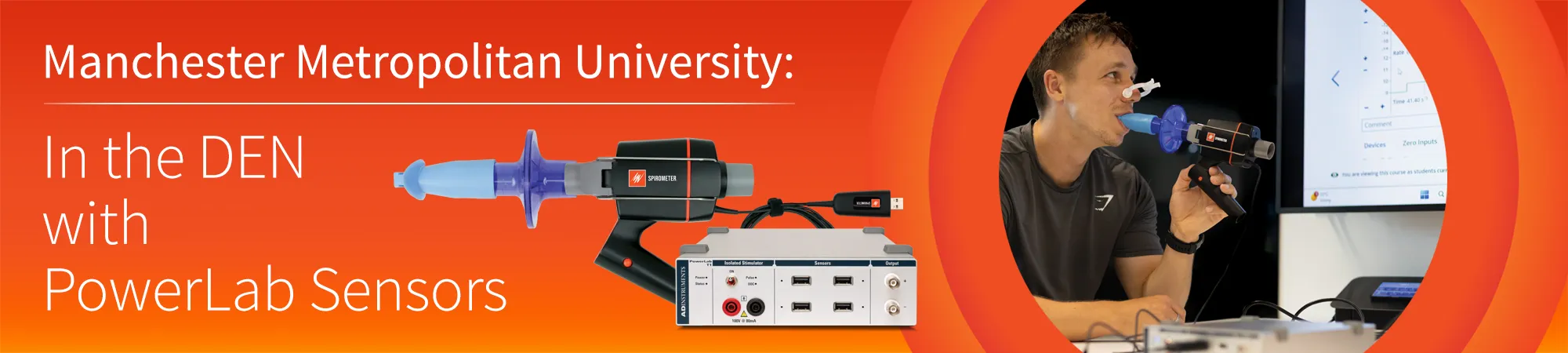
With a £1.27million grant from The Office For Students, the higher education regulatory body in the UK, Liam and Gethin have taken Manchester Met’s simulationist and active learning offerings to the next level with the DEN. The DEN, or Digital Educational Nexus, combines an AI-driven patient-simulation experience with a curated range of high-quality educational tools. Each aspect of the DEN is designed to get students engaged with the concepts and impacts of physiological science, and to develop the real-world skills associated with physiology. For Liam and Gethin, PowerLab Sensors are a crucial part of the DEN environment.
“The driving force behind purchasing the PowerLab Sensors was largely because, as an institution we are very interested in active learning,” Gethin says, “We want students to want to come to campus. We want them to come to this fancy new building, and we want students to engage with their learning.”
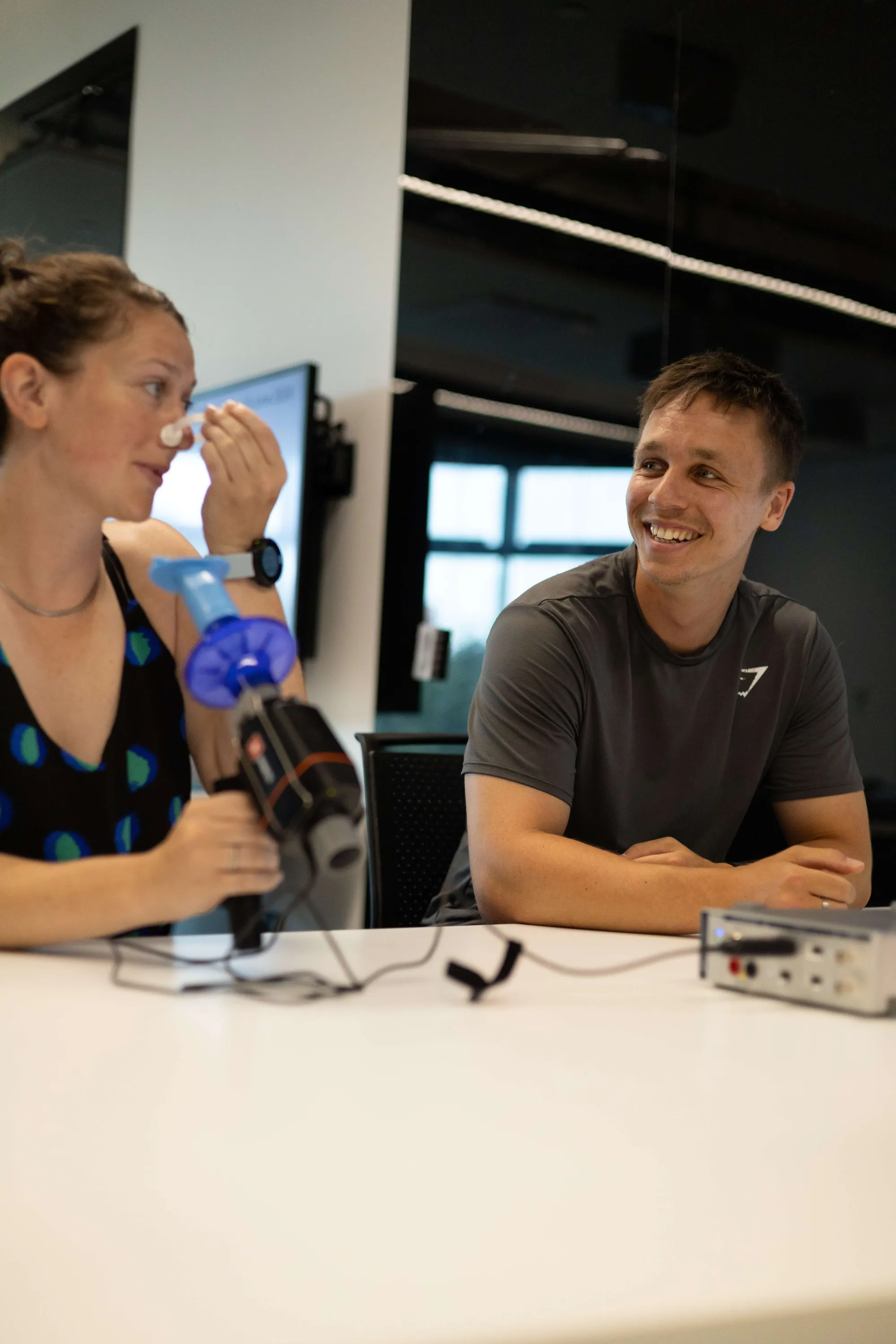
“The PowerLab Sensors are very much part of that. They are very portable, so we are able to do physiological measurements, and in places that you wouldn't traditionally be able to do that sort of teaching.”
“They’re an all-in-one package,” Liam says, “I can turn up with a bag of them and do multifactorial and multi-part labs, which I couldn't run in the past because I'd have to take the whole lab with me. Whereas now, I've got that whole thing in a little USB stick, which is absolutely amazing.”
“We're thrilled to be the first in the world to get a full suite of PowerLab Sensors, because it really allows us to teach more students and bring that science of life to all those classes as well. It gives us so much more flexibility in the way that we teach and also where we teach.”
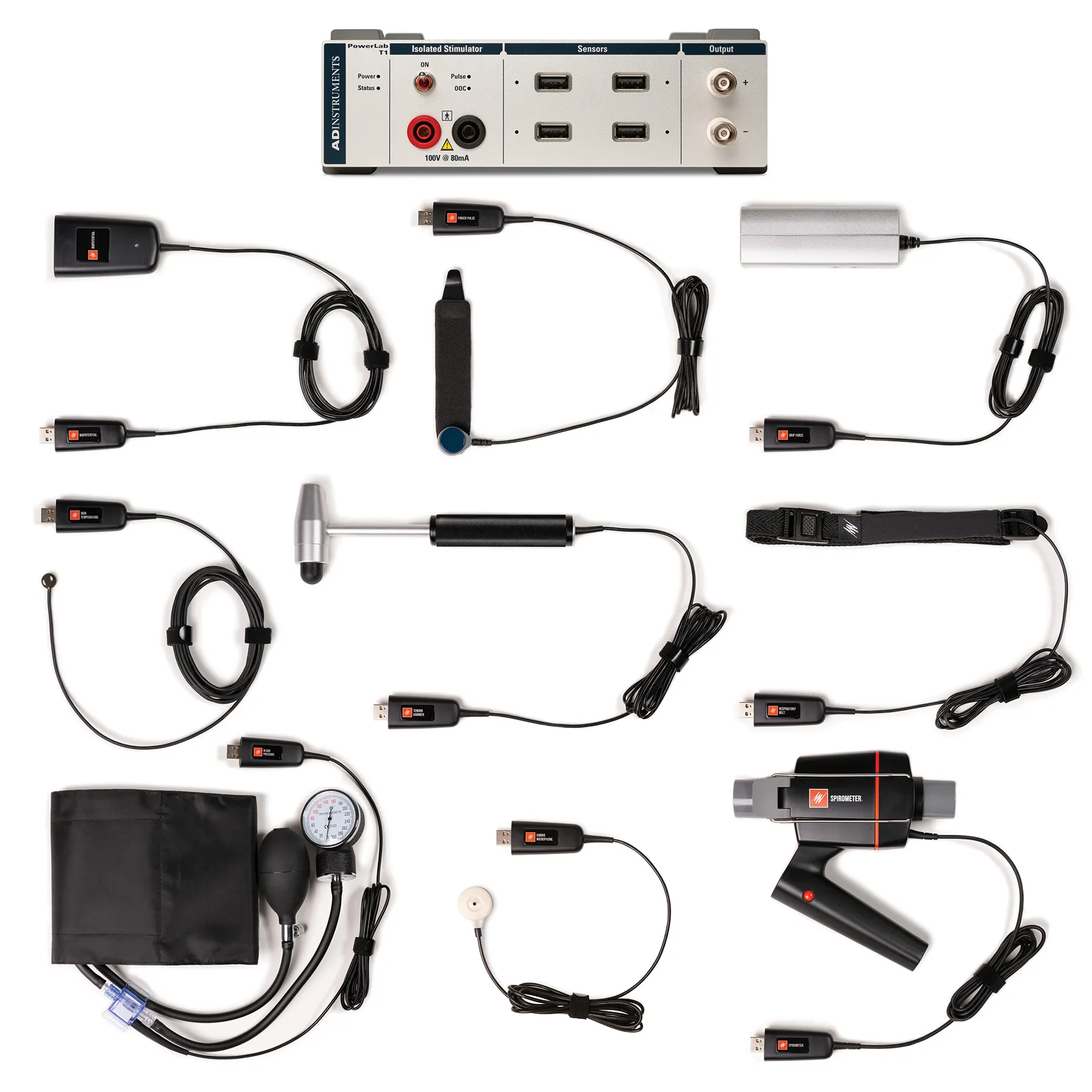
Related: PowerLab Sensors - The Future of Educational Hardware >>
The portability of the PowerLab Sensors has enabled Liam and Gethin to turn any room, any contact time with students, into a potential lab experience.
“The ability to move very good, high-quality equipment around a building, around a facility, to make sure that we really expand how often we can teach this fascinating subject, that's a huge benefit.”
- Dr Gethin Evans
“The ability to move very good, high-quality equipment around a building, around a facility, to make sure that we really expand how often we can teach this fascinating subject, that’s a huge benefit,” Gethin says, “For me, there are three main benefits of the T1 PowerLab system. The first is that the T1 is very portable. That certainly helps with our idea of active learning, taking things outside of a traditional laboratory environment. The second is that previous iterations of the sensors weren't able to do certain techniques, such as nerve conduction, which you can now do as part of the T1 system. And the third is that it provides a hub for many sensors to be put in together.”
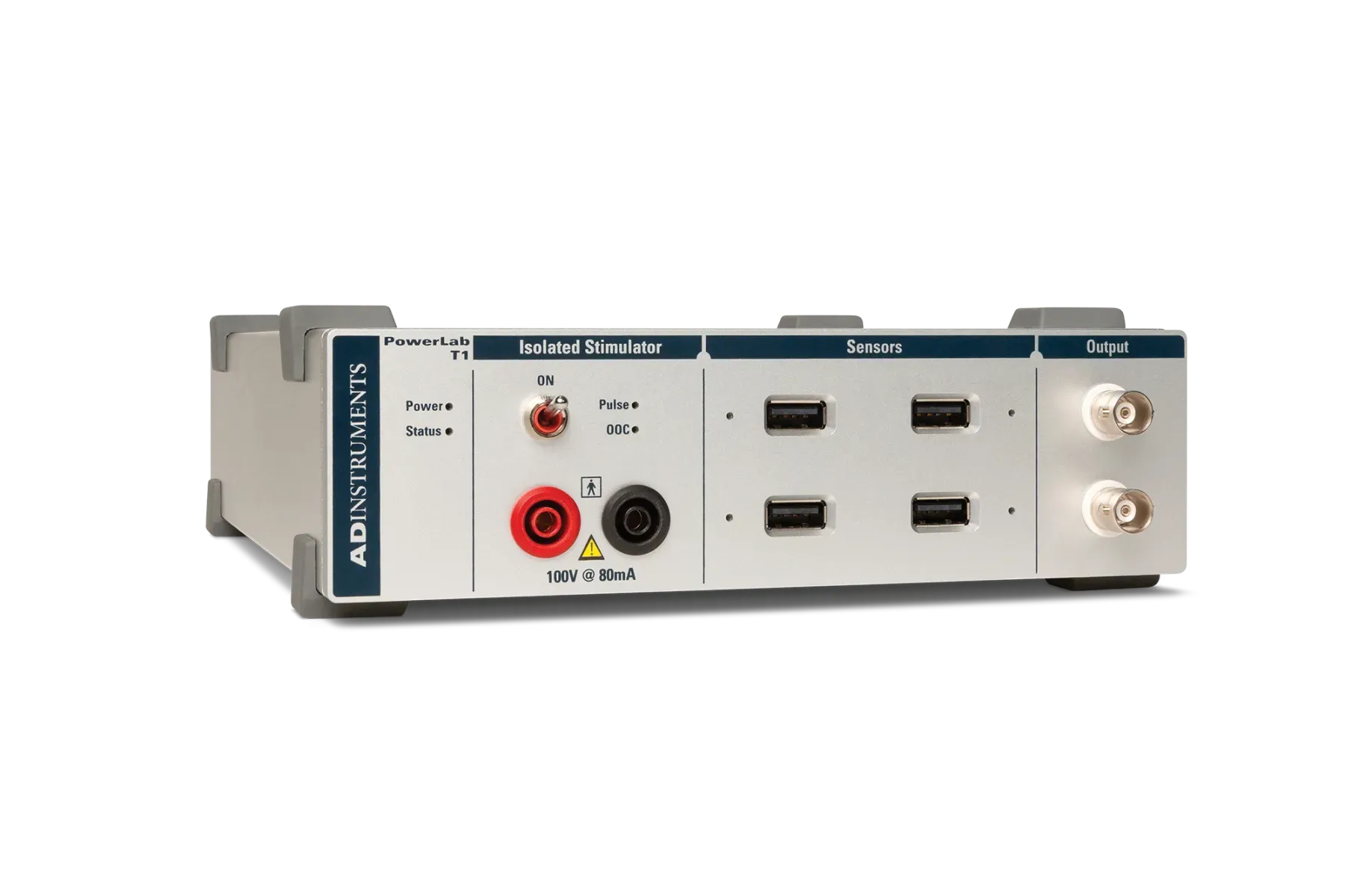
“I'm taking it along to lecture theaters, and I'm doing live experiments in the lecture theater with my students."
- Dr Liam Bagley
For Liam, this has meant bringing the lab back into the lecture theatre, and reviving those theatrical physiological roots. “I'm taking it along to lecture theaters, and I'm doing live experiments in the lecture theater with my students,” Liam says, “The main draw of using the T1 with the PowerLab Sensors is, again, ease of use, portability. And I can take it anywhere. It's such a high grade bit of kit in such a portable and easy to use package. And I can do so much with it that I couldn't do previously without a lot more equipment.”
The Combined Strengths of Lt and PowerLab Sensors
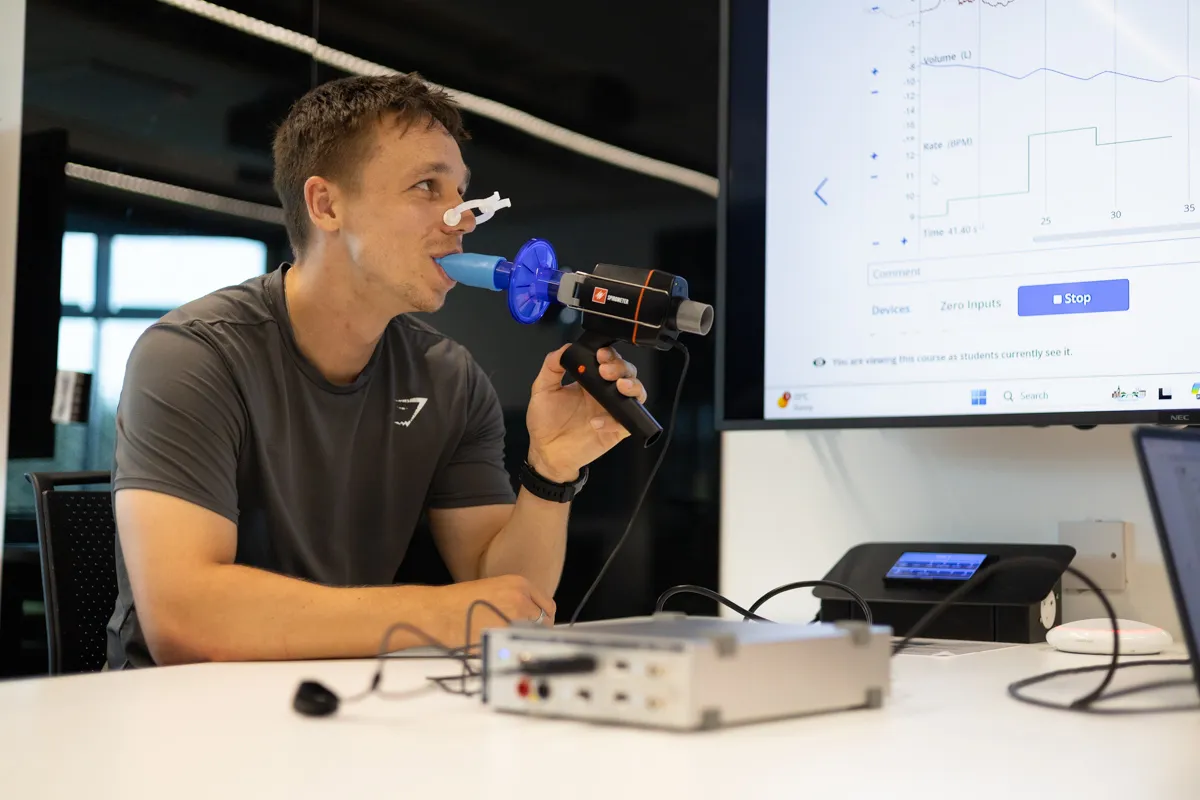
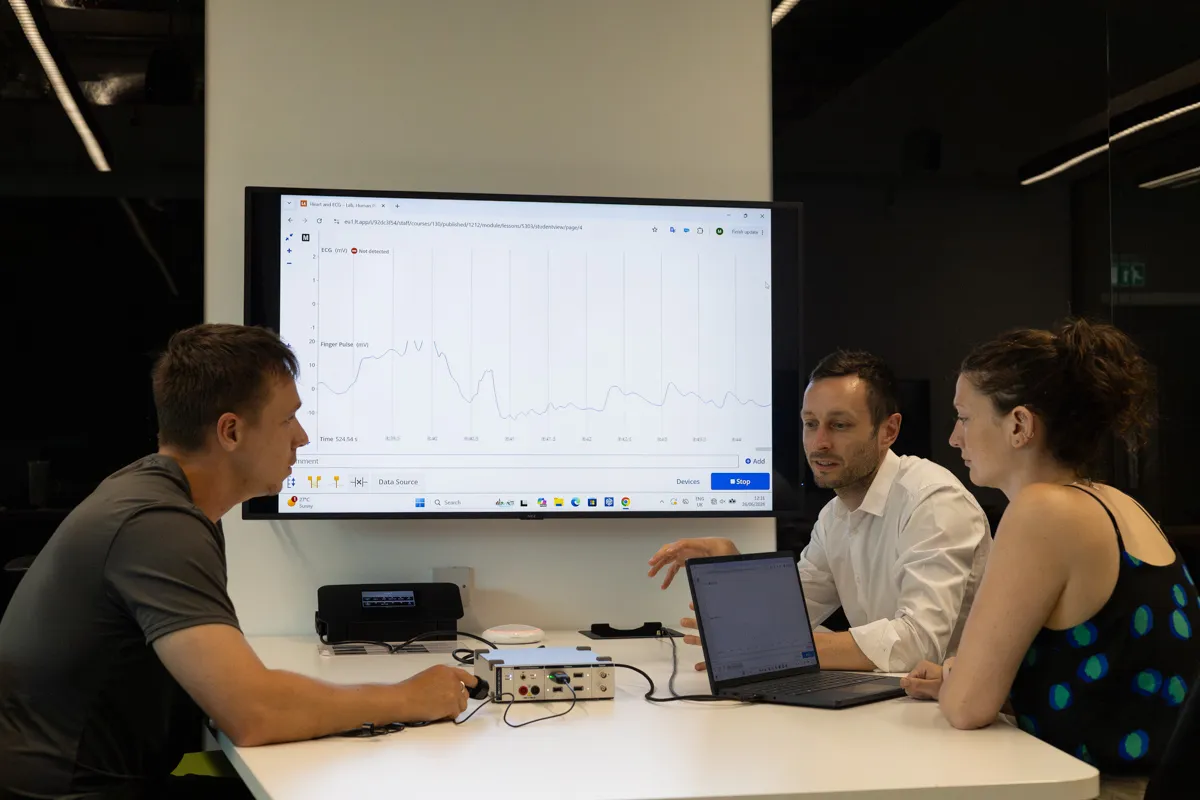
During the pandemic, Gethin rushed to find a solution to the lab-based needs of biological sciences students in a world that couldn’t have students in the lab. At the time, he tried out Lt, and with the addition of PowerLab Sensors that experience has only improved. “Lt and the PowerLab Sensors really tie everything together,” Gethin says, ”What we're aiming for at Manchester Met is this active learning idea of getting students to do things beyond the lecture theatre. Lt really helps with that because, historically, we might have a couple of hours in a physiology lab to do a certain physiological technique, and then after that we're pretty much done and we're left to textbooks.”
“The idea here is that we can bring the sensors into an active learning environment, take more measurements more often, but then with Lt we can take that beyond the institution as well. Students can access Lt from their own laptops at home. They can revise what they've been doing as part of their experiments that day, all of which just enhances that offer that we're giving students.”
"[So many] subjects are founded in physiology. We want students to enjoy the subject. The PowerLab Sensors and the Lt platform allow students to enjoy that subject more often."
- Dr Gethin Evans
“[So many] subjects are founded in physiology. We want students to enjoy the subject. The PowerLab Sensors and the Lt platform allow students to enjoy that subject more often. If you move away from the idea of traditional lab environments where you're timetabling students for a set amount of time, and try this idea where we're allowing a little bit more freedom of when you can take those measurements and how you take those measurements: the more fun your students are going to have, the more engaging it's going to be, the more they're going to understand things, the better experience they'll have, and the better that is for everyone.”
Related: Learn more about Lt >>
Bringing physiology to life is easy with PowerLab Sensors. “The look on a student's face using the PowerLab Sensors is really awesome, because it's live in real time.” Liam says, “Previously, I might be explaining a concept in a lecture, and I'll say, ‘okay, turn the page’ or ‘look at this slide’, but to actually see that concept in real time and how that changes in their own body is absolutely awesome.”
“Those physiology labs are the most exciting. The students are shouting across the room about what they’re seeing and what they're doing and not about what they're doing later on. They get really excited about it.”
“The look on a student's face using the PowerLab Sensors is really awesome, because it's live in real time.”
- Dr Liam Bagley
The purposeful design and high-quality signals recorded by the PowerLab Sensors not only help students to get up and running sooner, but also reinforce the scientific validity of the signals they’re recording. “It’s a proper piece of scientific equipment,” Liam says, “and students see that.”
"This is high-grade research equipment that [students are using], and this is the best in the world that you have access to here. That has been really amazing. And it's really good for students to be able to see that as well and to use such a high-grade kit at an early stage in their academic career."
- Dr Liam Bagley
“I can really emphasize that to the students, you know? This is high-grade research equipment that you are using, and this is the best in the world that you have access to here. That has been really amazing. And it's really good for students to be able to see that as well and to use such a high-grade kit at an early stage in their academic career.”
For Liam and Gethin, the practice of physiological laboratory skills is fundamental to the education of physiology students. The more they can connect the theoretical to the physical, and the more often they can make those connections, the better prepared they’ll be for a future in research, industry, or clinical practice.
“My advice for anybody who is considering pursuing a career in scientific research is to try and obtain as much experience as you possibly can before you get into it,” Gethin says, “That involves obviously studying a certain degree, but it’s also making sure that you get as much experience as possible with the equipment you might use for your future research. Getting that experience means you’ll understand the processes of research before you actually start doing it.”
Related: Embed hands-on learning in your lab >>
About the academics
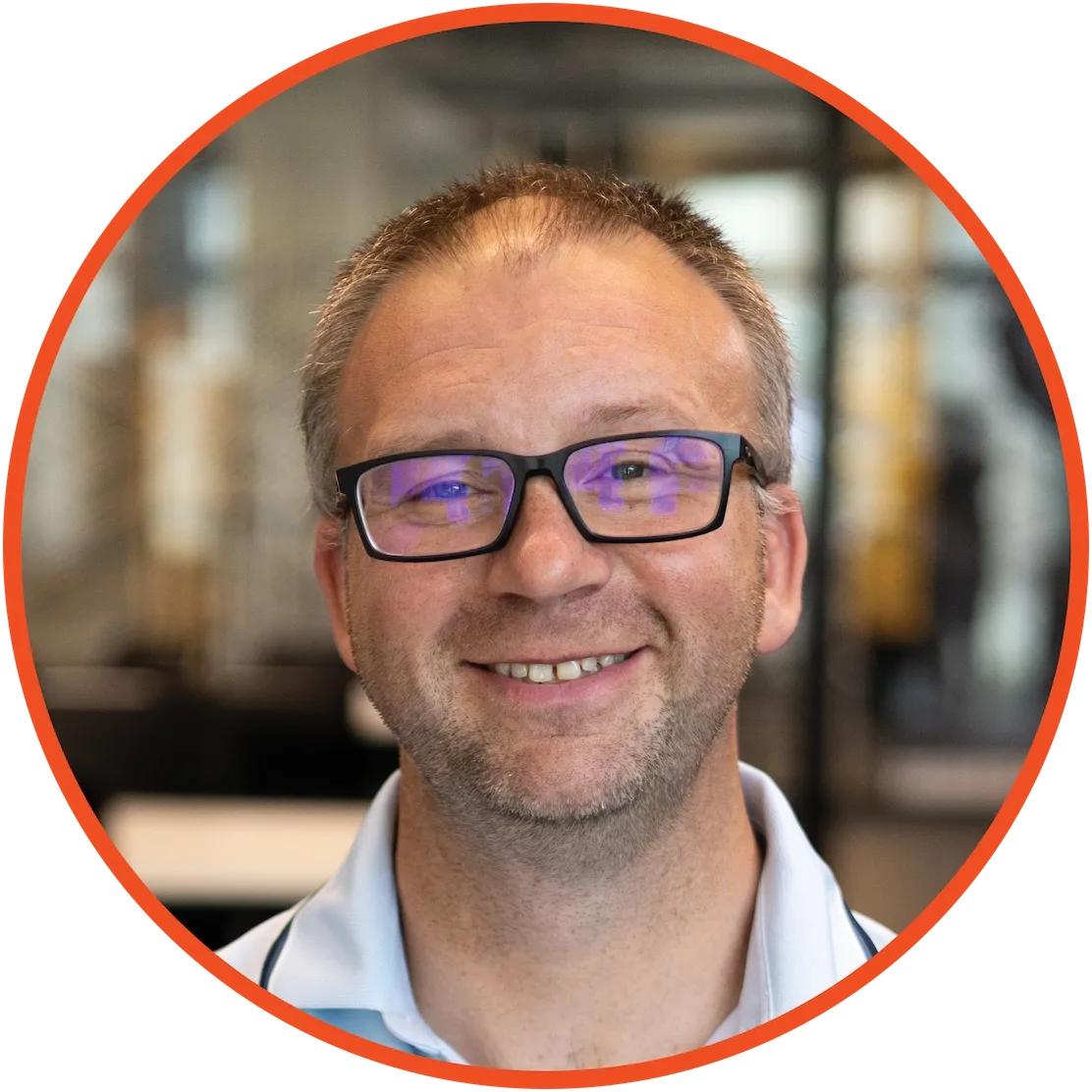
Dr Gethin Evans
Dr Gethin Evans is a Reader and Deputy Head of the School of Biological and Chemical Sciences at Manchester Metropolitan University. For the past 15 years he has championed active learning and improving student engagement in Science and Engineering at Manchester Metropolitan University with a major focus being technology enhanced education.

Dr Liam Bagley
Dr Liam Bagley is a Senior Lecturer and degree programme leader at Manchester Metropolitan University. His teaching centres around whole organ physiology and physiological systems. His education research interest is in the authentic development and assessment of skills through active learning environments, workplace simulations, and storytelling.
Education-Related Publications
Cooper, Gordon J., and Liam Bagley. “The Role of the Capstone Project in Undergraduate Study in the Development of Key Transferable Skills.” Current Opinion in Physiology, vol. 47, Feb. 2026, p. 100915. https://doi.org/10.1016/j.cophys.2026.100915.
L, Bagley, et al. “The Story so Far………- Current Opinion in the Use and Applications of Interactive Storytelling in Physiology and Clinical Education.” Current Research in Physiology, vol. 8, Jan. 2025, p. 100142. https://doi.org/10.1016/j.crphys.2025.100142.